
Last updated November 24, 2026
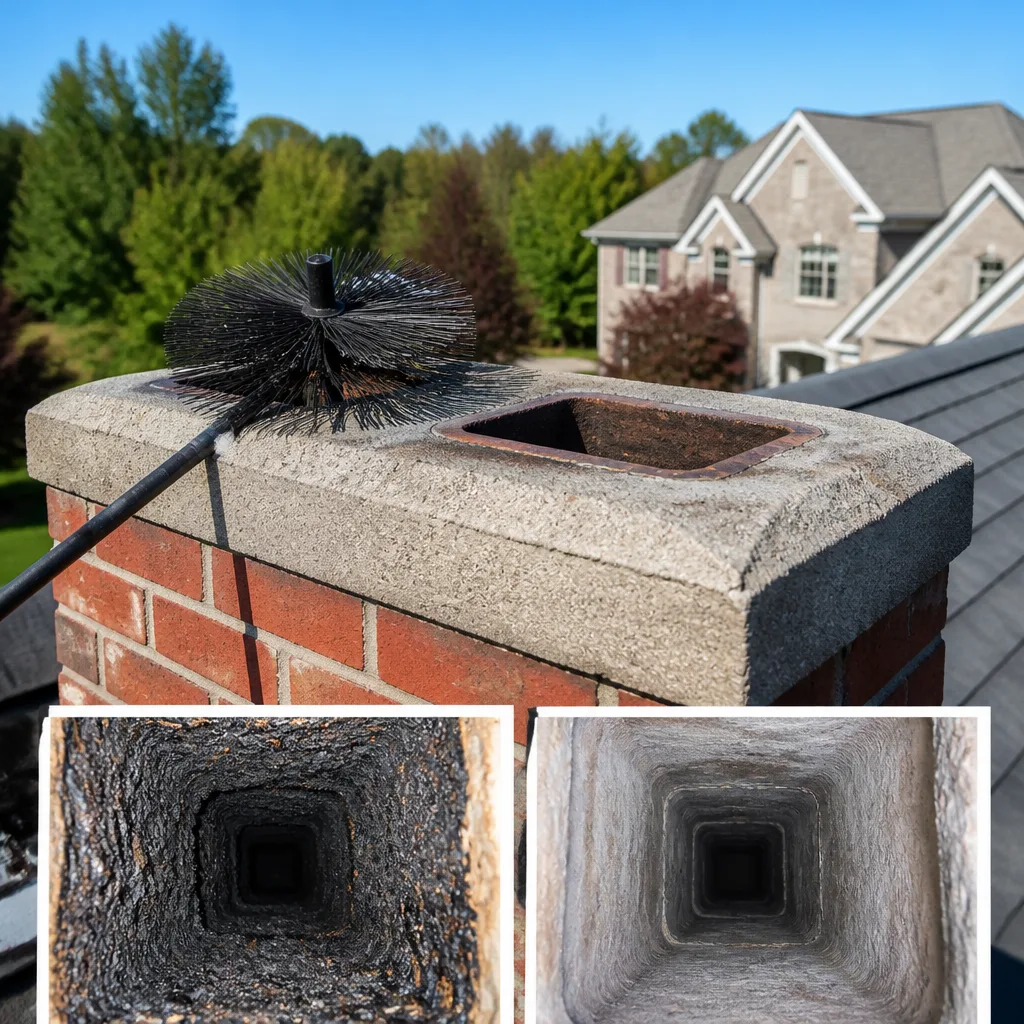 Sweep & inspection
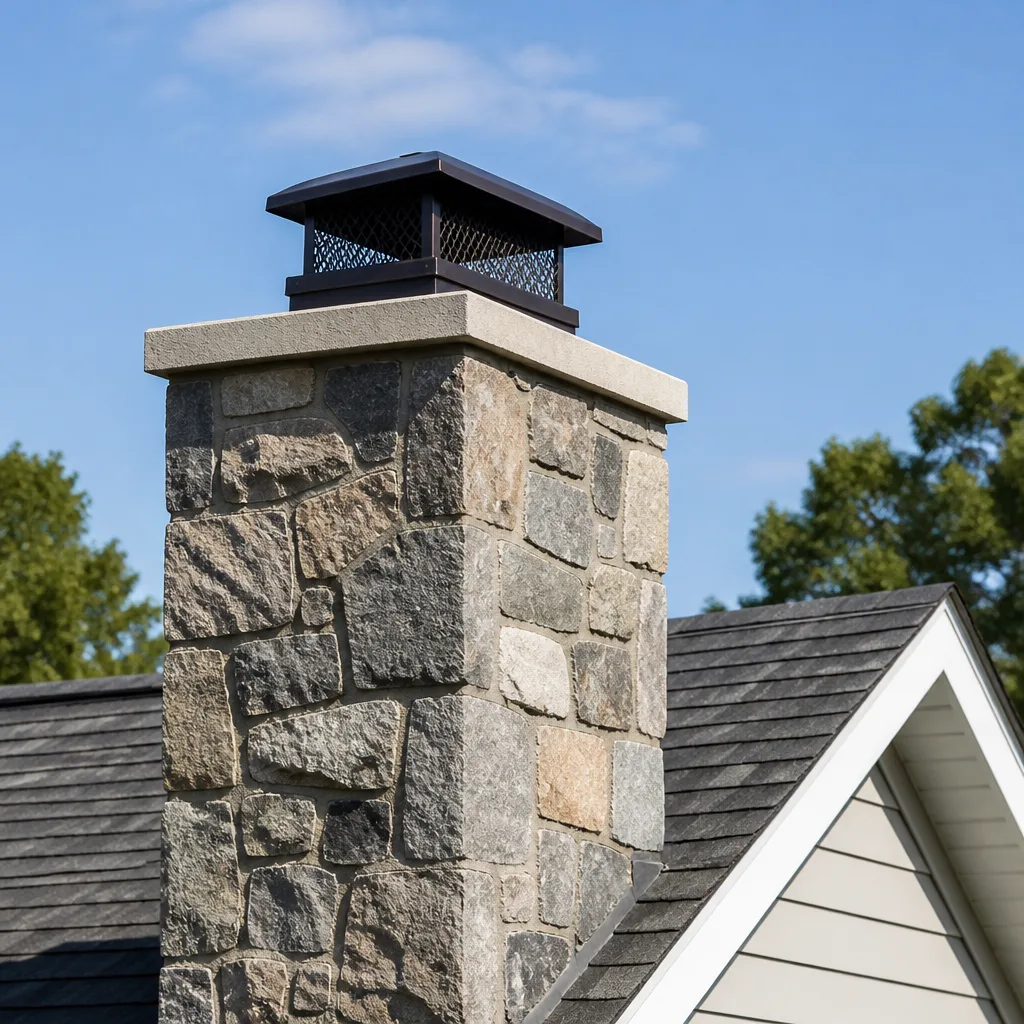 Caps & crowns
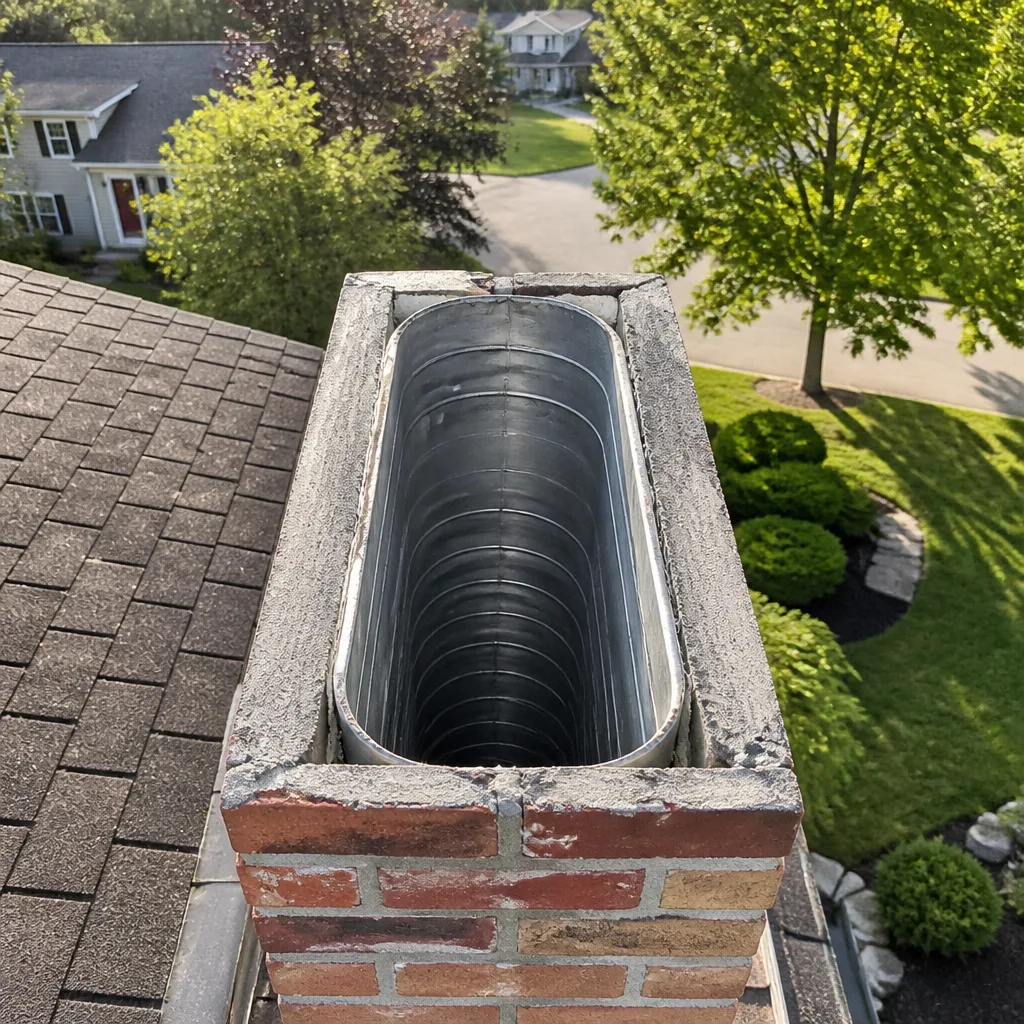 Flue relining
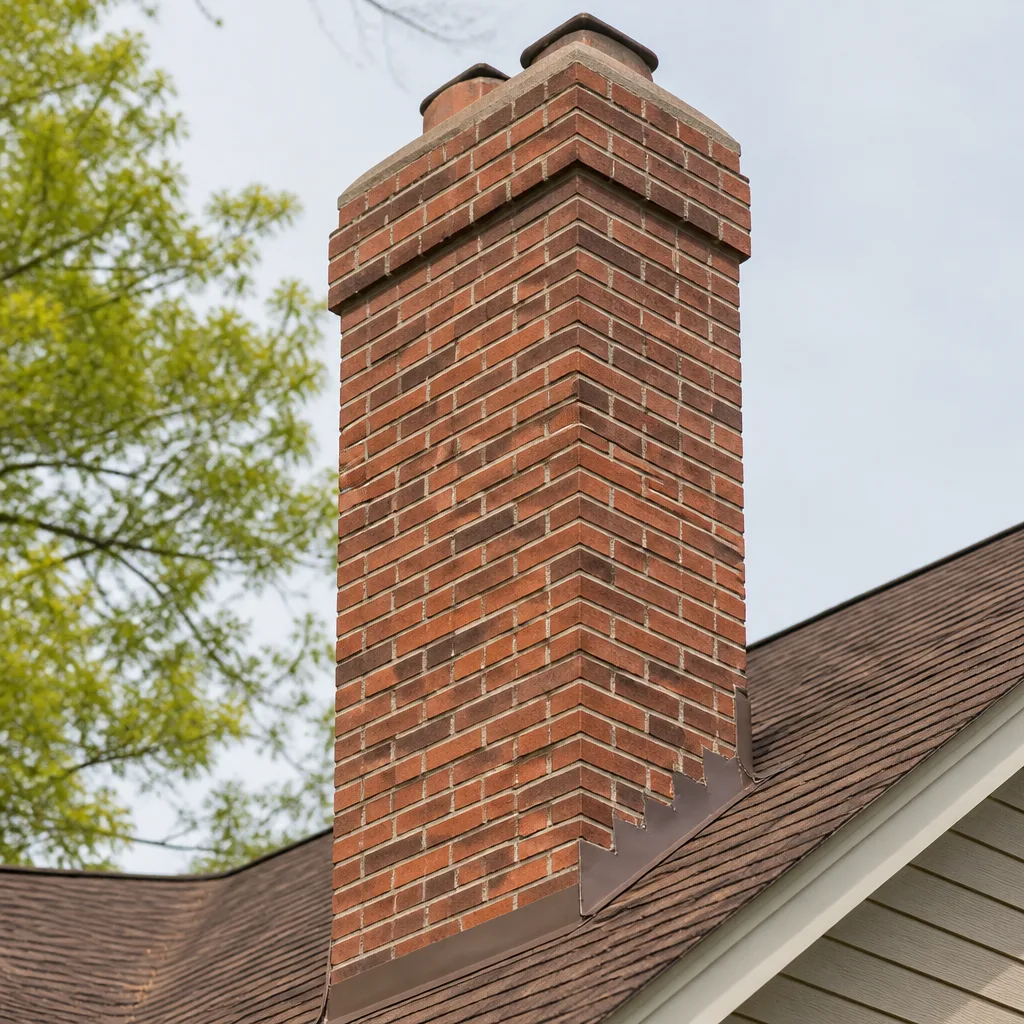 Masonry repair
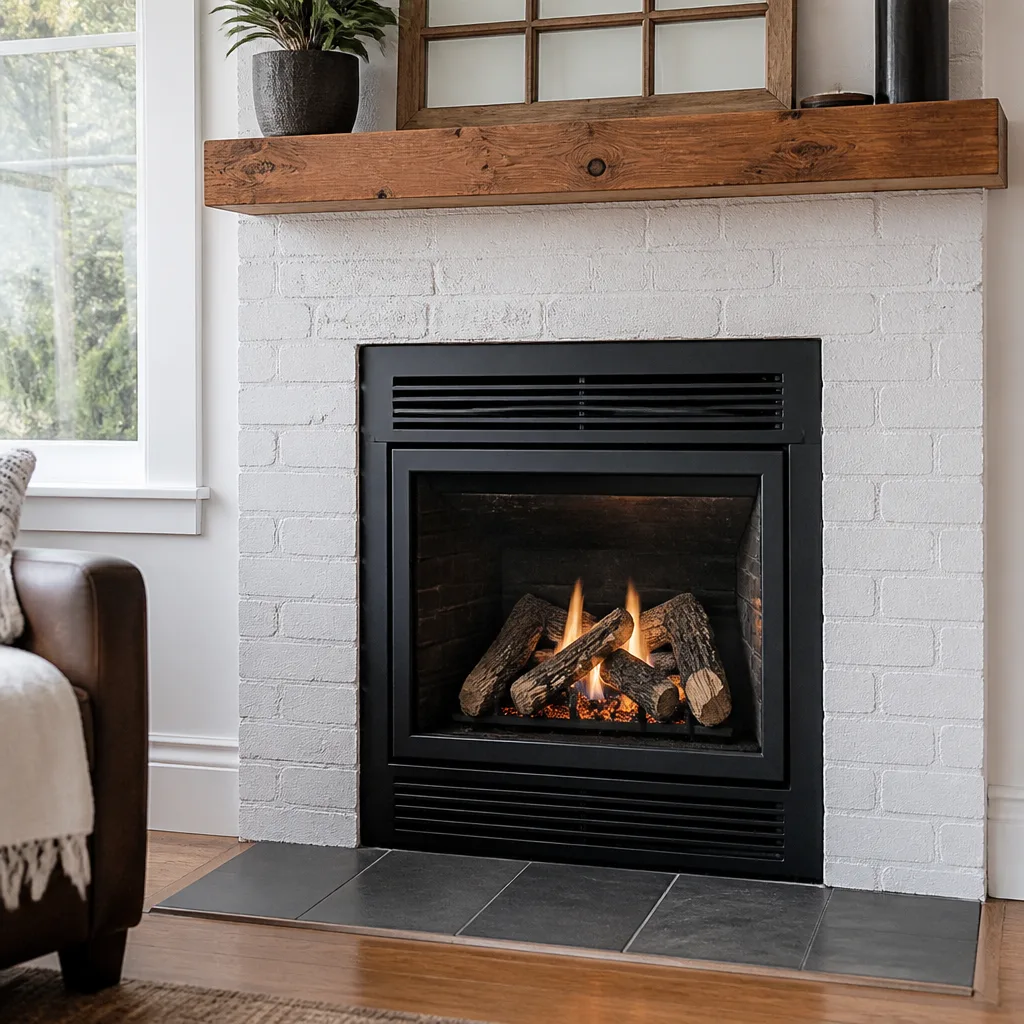 Gas fireplace service
Level 1 sweep and inspection to the NFPA 211 annual standard - flue, crown, cap, and flashing checked and photographed
Chimney sweep logs do not sweep chimneys. They loosen some creosote - which then falls where a brush and vacuum still have to collect it.
The Complete Guide to Chimney Cleaning in Sandy
Most chimney advice you’ll find online was written for a generic American house in a generic American climate. Sandy isn’t generic. The city sits in a cold-air basin where winter inversions trap smoke low over the valley, and that single geographic fact changes almost everything about how a fireplace in Sandy actually behaves. Fires burn longer and hotter to overcome sluggish draft. Longer, hotter fires manufacture creosote at a pace the standard “sweep it once a year” rule doesn’t fully account for. This guide walks you through what chimney cleaning in Sandy really involves: how local fuel choices and inversion seasons shape creosote staging, what separates a cleaning visit from a proper inspection, what a specialist catches that a generalist misses, and the realistic timeline from your first call to the documentation in your hand. Mention Sandy once more before we start? Consider it done.
Quick Answer
A chimney in Sandy generally needs sweeping once a year, but homes that burn heavily through inversion season, or burn a lot of pine and softwood, often need it more frequently, closer to every eight to ten months of active burning. Cleaning removes creosote and soot; inspection tells you whether the flue, liner, smoke chamber and firebox are still sound. A full-service visit combines both, and in Sandy the combination matters more than most homeowners realize.
Styles & brands we work with
- Sweep & inspection
- Caps & crowns
- Flue relining
- Masonry repair
- Gas fireplace service
Table of Contents
- Why Sandy’s Inversions Change Your Creosote Timeline
- How Your Fuel Choice Affects Cleaning Frequency in Sandy
- Cleaning vs. Inspection: What’s the Difference and When You Need Both
- What a Chimney Specialist Sees That a Generalist Sweep Misses
- Creosote Stages: From Level 1 to Level 3 and What Each Means for You
- The Realistic Timeline: From Booking to Post-Cleaning Documentation
- Sandy Neighborhoods and What Their Chimneys Tend to Show
- What Chimney Cleaning Costs in Sandy
Why Sandy’s Inversions Change Your Creosote Timeline
A temperature inversion happens when a layer of warm air settles over a pool of colder air near the ground. Sandy, sitting beneath the Wasatch bench, regularly gets these during the colder months. Smoke from a chimney during an inversion doesn’t rise and disperse the way it does on a clean, breezy day. It lingers. It cools as it climbs. Cooled flue gases deposit creosote on the liner walls more aggressively than warm, fast-moving exhaust would.
That’s the mechanical explanation. What it means at your hearth is simpler: your fire has to work harder to draft properly during an inversion, and a fire working harder produces more incomplete combustion. More incomplete combustion means more creosote. Over a Sandy winter with several extended inversion stretches, a household that burns steadily can push their flue from a light, powdery Level 1 creosote stage into a sticky, glazed Level 2 stage faster than the national “annual sweep” rhythm assumes.
Cold-start fires compound this. When you light a cold fireplace and the flue hasn’t warmed yet, the first several minutes of combustion send cooler, moisture-heavy smoke up the chimney. Those cold-start minutes are some of the biggest creosote contributors of the entire burn cycle. In Sandy’s inversion season, the flue also takes longer to warm because the outdoor air is denser, which stretches that cold-start window out.
None of this means you need to panic-clean. It means your cleaning interval should be built on observation, not just a calendar. A trained sweep who looks at your actual flue and tells you what they found is worth more than any fixed schedule.
How Your Fuel Choice Affects Cleaning Frequency in Sandy
What goes in the firebox determines what ends up on the liner walls. Sandy homeowners burn a mix of woods and the difference between them is real. Here’s a rough ranking of how each common fuel type affects creosote accumulation:
- Seasoned oak and dense hardwoods: the cleanest burn. High density, low moisture if seasoned properly (roughly a year, split and stacked under cover), and steady heat output. Creosote builds more slowly and tends toward the powdery Level 1 stage.
- Mixed hardwood: common in Sandy and a solid middle ground. Frequency of cleaning is closer to the standard annual sweep if you burn moderately.
- Pine and softwoods: the highest creosote producers. Pine is acidic, resinous and burns fast and hot, and it deposits more creosote per cord than hardwood. Sandy households burning pine as their primary fuel should expect to sweep more frequently; households using pine only for kindling and start-up are fine with a standard interval.
- Manufactured fire logs and compressed sawdust logs: high heat, low ash, generally clean burn, but they burn hotter than natural wood, and continuous heavy use is worth mentioning to your sweep.
The other fuel variable in Sandy is moisture content. Wood with more than about 20 percent moisture content produces more smoke and more creosote because the fire spends energy driving water off before it can burn cleanly. If you’re not sure your wood is dry, ask your sweep during the inspection.
We generally tell Sandy homeowners the honest answer: the fuel choice matters, but the burn habits matter more. Slow, smoldering, overnight-damped-down fires produce dramatically more creosote than a hot, active fire on the same fuel. Match your cleaning interval to how you actually burn, not how you think you burn.
Cleaning vs. Inspection: What’s the Difference and When You Need Both
These are two distinct services and the difference matters for your safety and your wallet. A chimney sweep physically removes soot, ash and creosote from the firebox, smoke chamber, flue and (where applicable) the damper area. An inspection is diagnostic: it evaluates the condition of the chimney system as a whole, from the firebox through the flue through the crown and cap, and reports what it finds.
You need both in the same appointment whenever the inspection turns up something unsafe, or whenever the sweep can’t do a complete job without first evaluating the flue. Here’s when a Sandy homeowner should book cleaning and inspection together:
- First time in a new home. You have no history of the chimney. Nobody knows when it was last swept or what’s inside it. Inspection before or alongside the first cleaning is essential.
- After a heavy burn season. If you burned steadily through an inversion-heavy winter, book the sweep and ask for a Level 2 inspection with it.
- After any chimney fire. Even a small one damages liners and can crack tile. Never assume it’s fine without inspection.
- Before installing a new appliance. Wood stove insert, gas log set, new fireplace: the flue needs to be verified before a new appliance is connected to it.
- Before selling or buying a home. A pre-listing or pre-purchase inspection on the chimney is a separate document from a general home inspection and buyers and sellers ask for it.
- When you notice any change in how the fireplace behaves. More smoke in the room, weaker draft, a smell you didn’t have last year. Those are diagnostic signs, not cleaning signs.
There’s a reason we offer inspection as a standalone service. Some companies use a “free inspection” as a sales funnel to sell repair work. A real inspection, done properly, is a standalone professional diagnostic with a written report and photos, and it stands on its own whether or not any repair is needed afterward.
What a Chimney Specialist Sees That a Generalist Sweep Misses
A generalist sweep brings a brush and a vacuum and cleans the flue. A chimney specialist evaluates the whole system. The difference becomes obvious the moment a job gets into liner condition, smoke chamber integrity or firebox repair, because that’s where the work either gets finished properly or handed off to someone else.
Here’s what a full-scope specialist actually looks at:
- Liner condition. Is it clay tile? Stainless? Flexible? Cracked, deteriorated, or still serviceable? The liner is the safety barrier between your fire and the wood framing of your house. A specialist reads it properly.
- Smoke chamber. The sloped area above the damper and below the flue. It’s often omitted from a basic cleaning and it’s a major creosote collection point. Glazed creosote here is a fire risk.
- Firebox integrity. Cracked firebrick, mortar joints, and any signs of heat damage in the firebox itself. The right repair depends on what’s actually failing.
- Crown and cap condition. A cracked crown lets water into the chimney structure. A missing or damaged cap lets rain, birds and debris in. Both are standard chimney cap & crown repair items for a specialist.
- Draft and combustion performance. When a fireplace smokes, the answer isn’t always a cleaning. Sometimes it’s a flue size issue, an offset, or pressure problems in the house. A specialist diagnoses that.
Where the specialist work becomes concrete is in the materials and systems they install. We work with DuraFlex flexible liner systems specifically because they solve a problem rigid liner installers turn away from: older, offset flues that a rigid liner physically cannot pass through. We use fireplace repair materials and approaches from recognized chimney brands like Gelco and Copperfield, so the components going into your chimney are ones you can look up and verify. And we offer HeatShield ceramic resurfacing as a repair-first alternative to full relining when the existing liner can still be saved. Not every liner needs replacing; the honest answer is worth having.
Creosote Stages: From Level 1 to Level 3 and What Each Means for You
Creosote doesn’t arrive at full thickness. It stages. Understanding the stages matters because each one calls for a different approach, and a Sandy home can move through the stages faster than a home in a milder climate.
Stage 1 (Level 1): soot and light, powdery creosote, flaky and easy to brush off. This is what a properly swept and reasonably managed chimney tends to accumulate between annual cleanings. Burns off cleanly with a hot fire and comes off cleanly with a brush.
Stage 2 (Level 2): sticky, crusty, often glazed. Much harder to remove with a standard brush. Stage 2 creosote is what forms when flue gases cool before they can exit, which is exactly what happens during extended inversion periods and long cold-start windows. A Sandy household burning steady through the winter can hit Stage 2 within a season.
Stage 3 (Level 3): hardened, glazed, tar-like. This is what chimney fire fuel looks like. Removing it is a specialty job using specific chemical treatments or a resurfacing approach, not a stiff wire brush. Stage 3 also signals that something in the burn pattern, fuel choice or draft has been consistently off.
The practical takeaway: don’t wait for a strange smell or a visible glaze before booking a sweep. A sweep at the end of a Sandy burn season gets the creosote off the walls while it’s still at Stage 1, which is when it’s cheapest and easiest to remove, and it gives you a clear report on whether you’re trending toward Stage 2.
The Realistic Timeline: From Booking to Post-Cleaning Documentation
Homeowners often want to know exactly what happens when they call, so here’s the honest sequence, without surprises.
- Booking. You call and describe the fireplace, your fuel, and whether you’ve noticed anything off (smoke, odor, weaker draft). We schedule the visit and confirm the scope: cleaning, inspection, or both.
- Arrival and setup. The technician sets up drop cloths and vacuum equipment to protect the room. No mess, no dust cloud in your living room.
- Inspection first. For a full-service visit, inspection comes before cleaning. Assessment of the flue, liner, smoke chamber, firebox, crown and cap.
- Cleaning. Brushing and vacuuming of the firebox, smoke chamber, flue and damper area. Creosote swept from the liner walls.
- Photo documentation. Pictures taken before, during and after, so you can see what was actually found and what was actually fixed. If any repair is recommended, the photos support the recommendation – or don’t, if the chimney is fine.
- Report and explanation. The technician walks you through findings in plain language. Where work can wait safely, you hear that. Where it can’t, you hear that too, with photos to back it up.
- Repair scheduling (if needed). If liner work, crown repair or firebox repair is warranted, you get a written estimate for that work separately. No pressure to bundle it on the spot.
The typical full-service visit takes roughly one to two hours on-site depending on the state of the chimney and whether repairs are being quoted. Documentation arrives with the visit or in a follow-up written report.
Sandy Neighborhoods and What Their Chimneys Tend to Show
Chimneys across Sandy aren’t identical, because home age and architectural era vary widely across the city. Here’s what tends to turn up in different parts of town.
In the older ranch and rambler neighborhoods near the Historic Sandy core, chimneys are more likely to have original clay tile liners that have aged into cracking, or masonry fireboxes that need repointing. These homes often benefit from a Level 2 inspection because the age of the liner itself becomes a factor.
In the bench neighborhoods climbing toward the foothills, where homes tend to be newer and higher on the slope, chimneys often face more wind exposure. Caps damaged by wind are a common find, and drafts that feel inconsistent on windy days are worth checking.
In the newer developments along Sandy’s southern and eastern edges, prefab and factory-built fireplaces are more common, and those have their own inspection requirements and liner systems. The technician needs to know what he’s looking at – bolted-together prefab chimney sections aren’t checked the same way masonry is.
We also serve Sandy homeowners who use their fireplaces as real heat, not decoration. Those are the homes most exposed to the inversion-driven creosote buildup described earlier, and they’re the ones who benefit most from booking a sweep proactively at the end of each burn season.
What Chimney Cleaning Costs in Sandy
Pricing depends on the condition of the chimney, the scope of the visit, and whether inspection or repairs are included. We don’t quote prices as fixed figures here, because we set the price per job by written estimate after understanding exactly what the chimney needs. What we can tell you is what goes into the estimate.
- Level of soot and creosote. Stage 1 is a straightforward cleaning. Stage 2 requires more work. Stage 3 is a specialty job.
- Flue configuration. Straight, easy-access flues are quicker. Offset flues and unusual chimney configurations take longer.
- Inspection scope. A standalone inspection is quoted separately from cleaning when you just want a diagnostic on the system.
- Repairs quoted separately. Cap, crown, firebox, liner, or smoke chamber repair, if needed, gets its own written line in the estimate.
The estimate itself is free. Nothing is recommended without photographic evidence you can see for yourself, and if the work can safely wait until next season, we say so. If you’d like an exact quote for your specific chimney, call Sandy Chimney Sweep Pros and we’ll arrange a visit.
Common Mistakes to Avoid
- Treating “annual” as a fixed calendar rule. Annual is a baseline. If you burn hard through Sandy’s inversion season or you burn pine as a primary fuel, you need to sweep more often than once a year. Ask for a real assessment, not a checklist interval.
- Skipping inspection because the cleaning “looked fine”. A cleaned flue can still have cracked tiles, a failing crown or a Stage 2 glaze the brush didn’t fully remove. Cleaning and inspection are separate tasks for a reason.
- Burning unseasoned wood. Wet wood is the single most consistent creosote driver we see. If a split piece hisses and smokes when it burns, it wasn’t ready.
- Damping the stove overnight and walking away. Long smoldering burns produce the glazed creosote that turns into Stage 2 and Stage 3 problems. A hot, active fire is the goal.
- Hiring a generalist because the coupon was cheap. Sweeping the flue is half the job. A generalist who doesn’t inspect liner, smoke chamber and firebox misses the things most likely to be a real problem.
- Ignoring the cap until birds move in. Sandy’s wind exposure takes a toll on caps. A missing or damaged cap is a straightforward repair that prevents water and animal intrusion into the flue.
- Assuming a home inspection covers the chimney. A general home inspection is not a chimney inspection. If you’re buying or selling a Sandy home with a real fireplace, ask for a separate chimney inspection document.
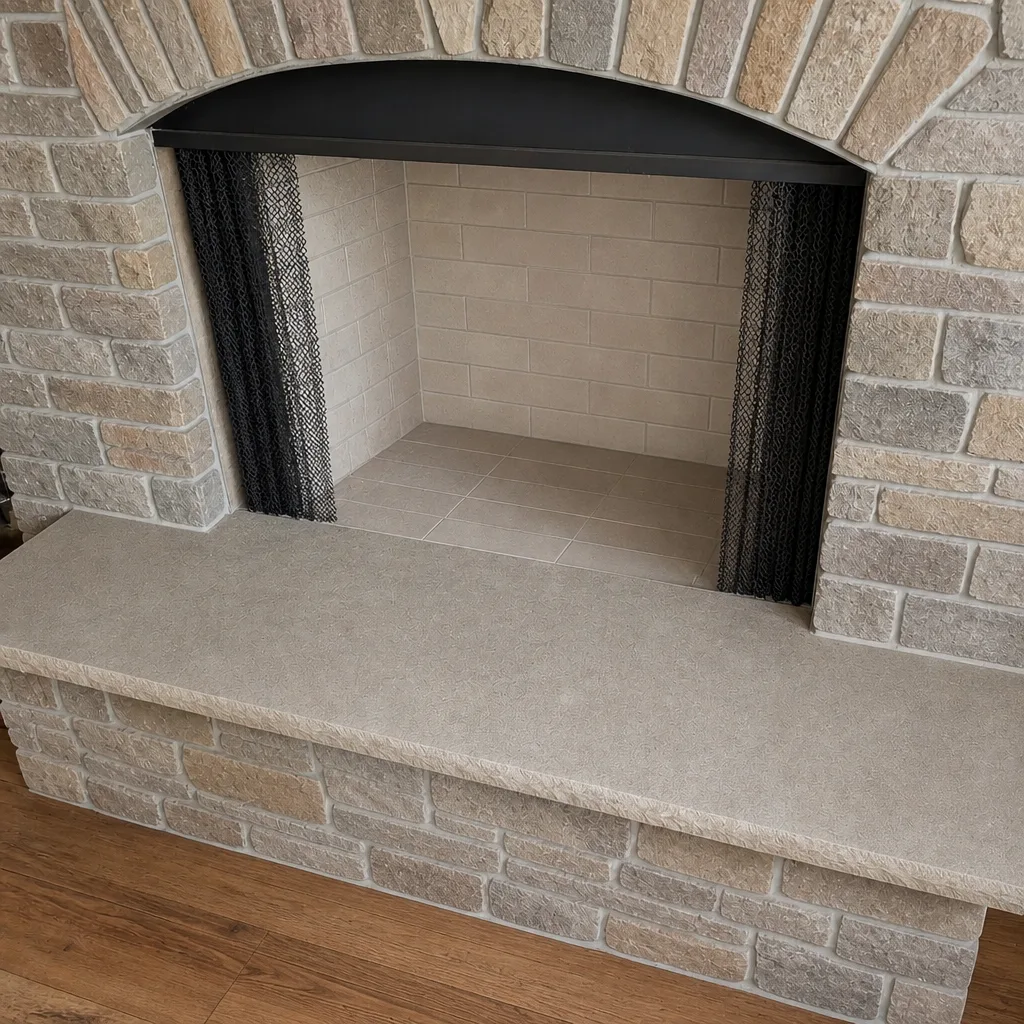
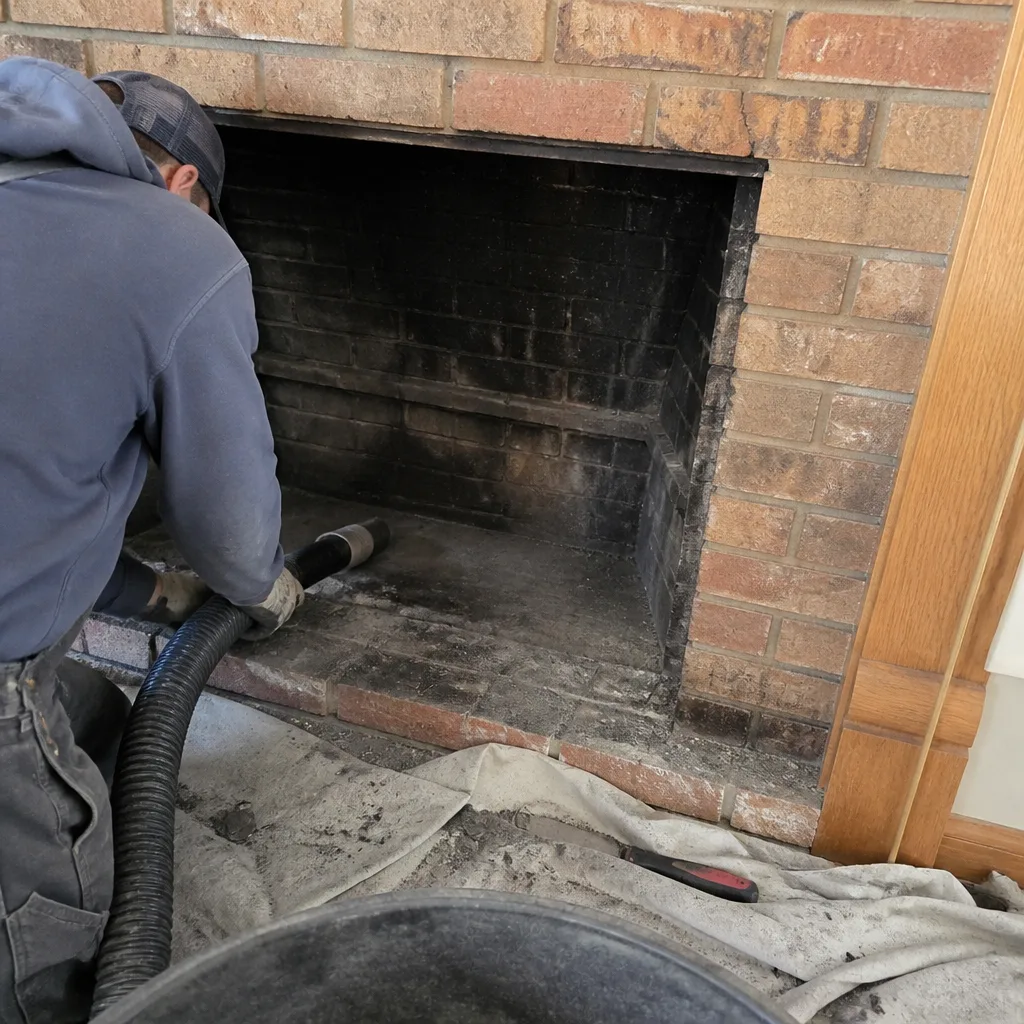
See the difference
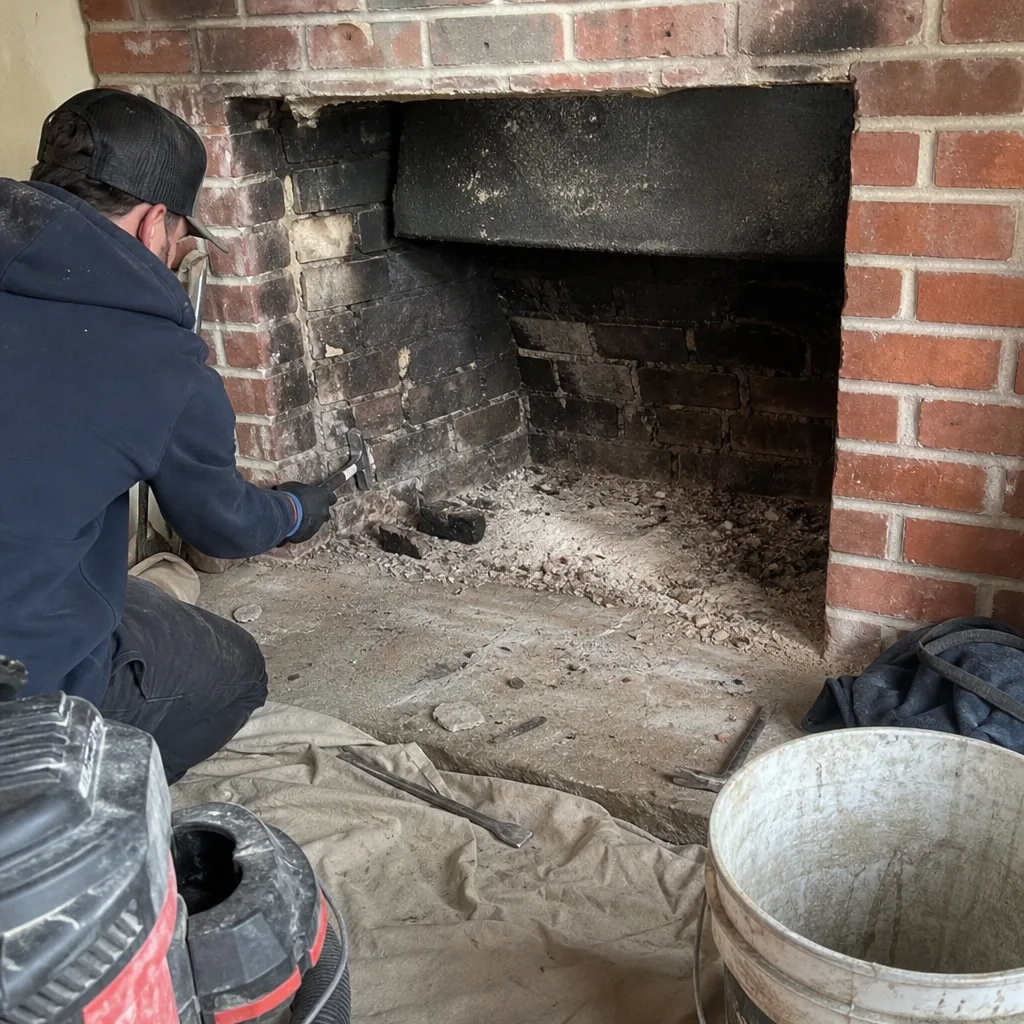 Before
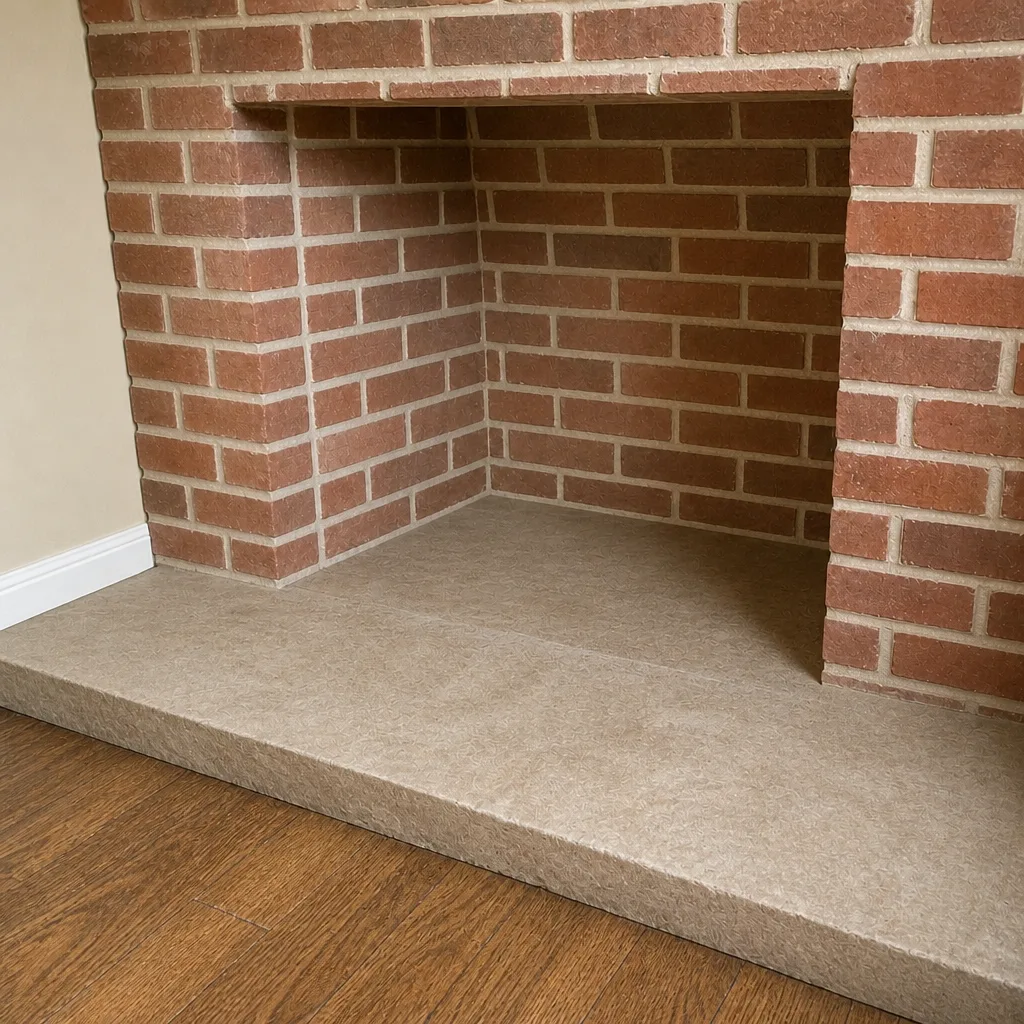 After
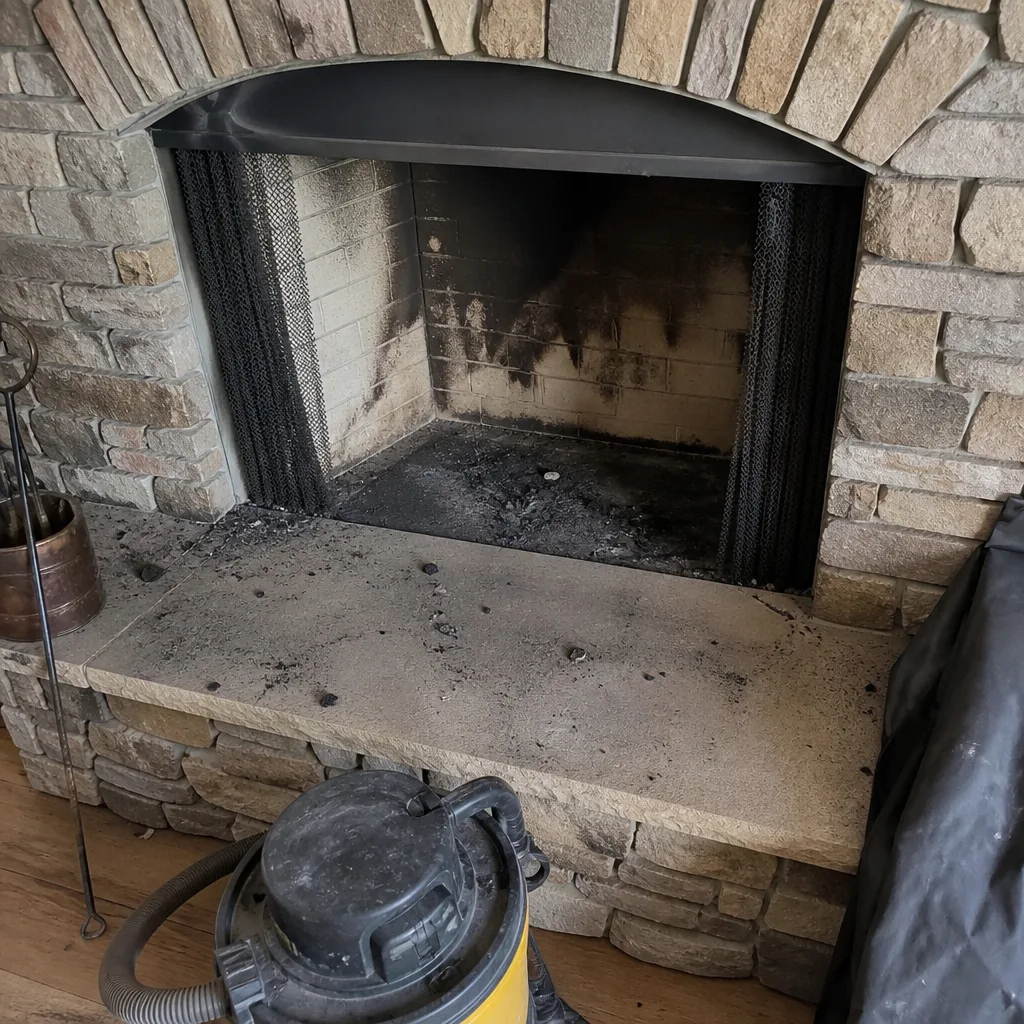 Before
 After
 Before
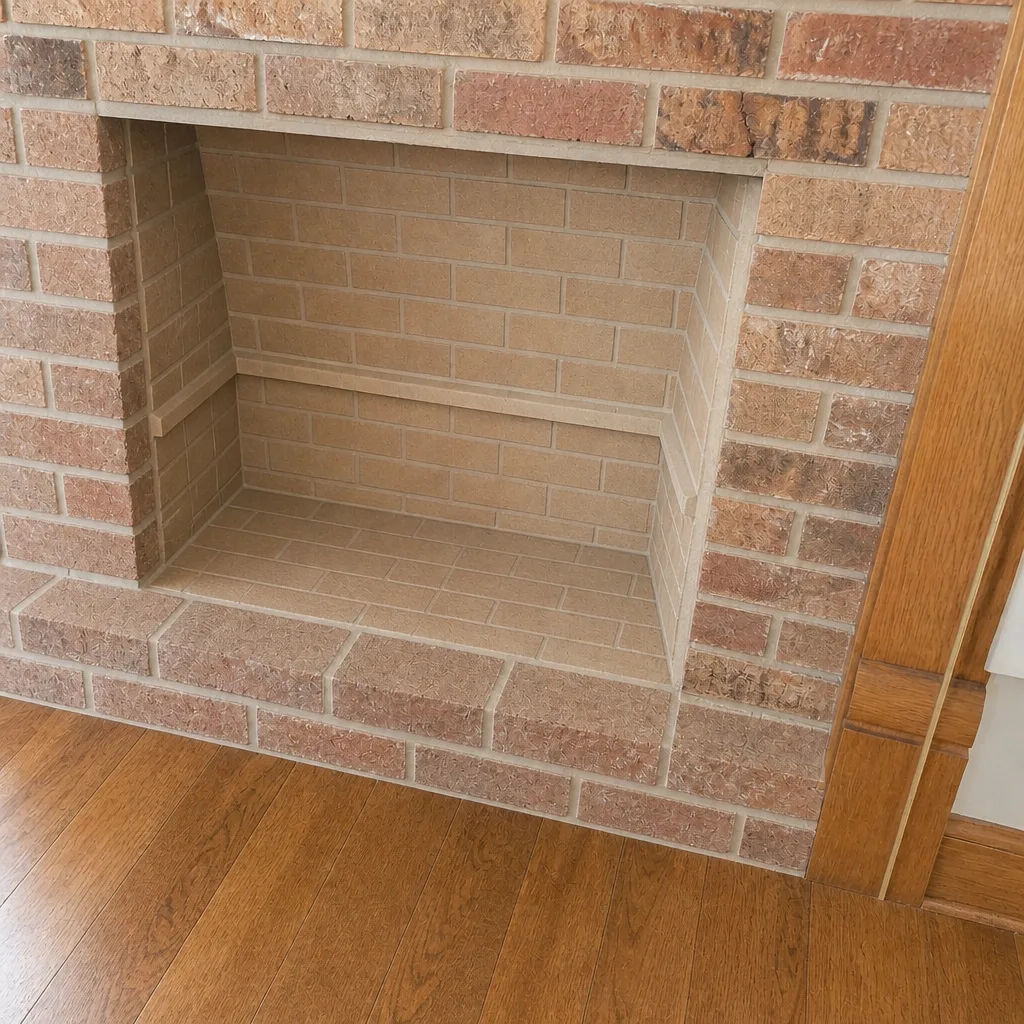 After
When to Call a Professional
Call a chimney professional when any of these apply: you’ve never had the chimney swept and you don’t know its history; you burn steadily through a Sandy winter and it’s been more than a year; you’ve had a chimney fire; the fireplace smokes into the room; you smell a strong, sharp odor even when the fireplace is off; the cap or crown is visibly damaged; or you’re buying, selling or insuring a home with a chimney. Sweeping and inspecting a chimney yourself isn’t a reasonable DIY task because the liner, smoke chamber and crown conditions that matter are not visible from the firebox and the diagnosis requires training and equipment.
Sandy Chimney Sweep Pros offers free estimates in Sandy. The inspector comes out, evaluates the system, documents what’s found with photos, and returns a written estimate for anything that needs repair. Nothing is recommended without camera evidence you can see for yourself, and work that can safely wait until next season is labeled as such. Call (844) 625-7409 to book.
Frequently Asked Questions
Once a year for a typical household, and closer to every eight to ten months of active burning for homes that burn heavily through Sandy’s inversion season or burn pine as a primary fuel. If you’re unsure, book a full inspection and let a specialist tell you what the flue actually shows. Call (844) 625-7409 for an exact quote – estimates are free.
A sweep cleans the firebox, smoke chamber and flue; an inspection evaluates the condition of the entire chimney system including the liner, smoke chamber, firebox, crown and cap, and returns a written report. In Sandy, a sweep after a heavy burn season is best paired with an inspection so both the cleaning and the diagnosis happen in the same visit.
Yes, in Sandy it’s common, and the reason is the temperature inversion pattern that traps cold air over the valley floor during the colder months. Fires draft more slowly during inversions, produce more incomplete combustion, and deposit creosote on the liner faster than they would in a milder or breezier climate. That’s why Sandy households benefit from a shorter cleaning interval than the standard once-a-year recommendation.
Level 1 is powdery soot that brushes off easily; Level 2 is sticky, crusty and often glazed and requires more effort or specific treatment to remove. Level 2 matters because it’s the stage where a chimney becomes more of a fire risk, and it’s the stage Sandy chimneys can reach faster than the annual schedule accounts for. Call (844) 625-7409 for an exact quote – estimates are free.
Yes. Manufactured logs burn cleanly and produce less ash than natural wood, but they still produce combustion byproducts that accumulate over time, and the heat they generate is worth checking against the liner’s rated capacity. An annual sweep and inspection keeps the record clean and catches anything you can’t see from the firebox.
Yes, and in Sandy that’s often the right call. Cleaning and inspection are separate services but they’re most efficient together, because the inspection identifies what the cleaning should focus on and confirms the flue is clear afterward. Call (844) 625-7409 to book a combined visit – estimates are free.
The Bottom Line
Chimney cleaning in Sandy is not the same as chimney cleaning anywhere else. The city’s inversion pattern, its common fuels and its mix of home eras mean a Sandy chimney can build creosote faster than the standard annual schedule assumes. Cleaning removes the creosote; inspection tells you whether the liner, smoke chamber, firebox, crown and cap are still doing their jobs. A full-service specialist covers both, uses materials from brands you can verify (DuraFlex, Gelco, HeatShield, Copperfield), offers liner resurfacing as a real alternative to full relining, and shows you photos before recommending a dollar of repair work. Sweep once a year as a baseline, adjust based on how hard you burn, and book an inspection whenever you’re unsure. Free estimates and honest reports. Call (844) 625-7409. We answer 24/7. Fast dispatch from 7am to 7pm, Sunday through Friday.
Written by the team at Sandy Chimney Sweep Pros.