
Last updated November 24, 2026
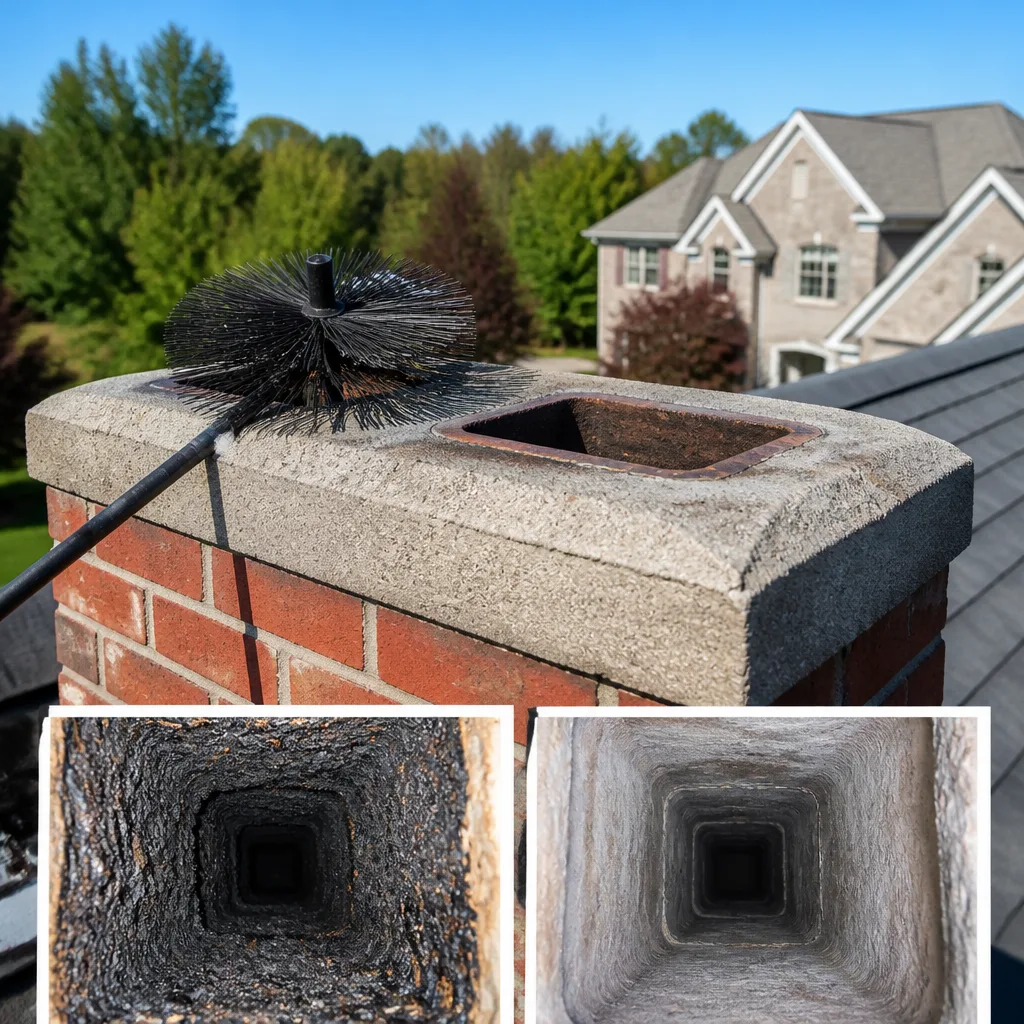 Sweep & inspection
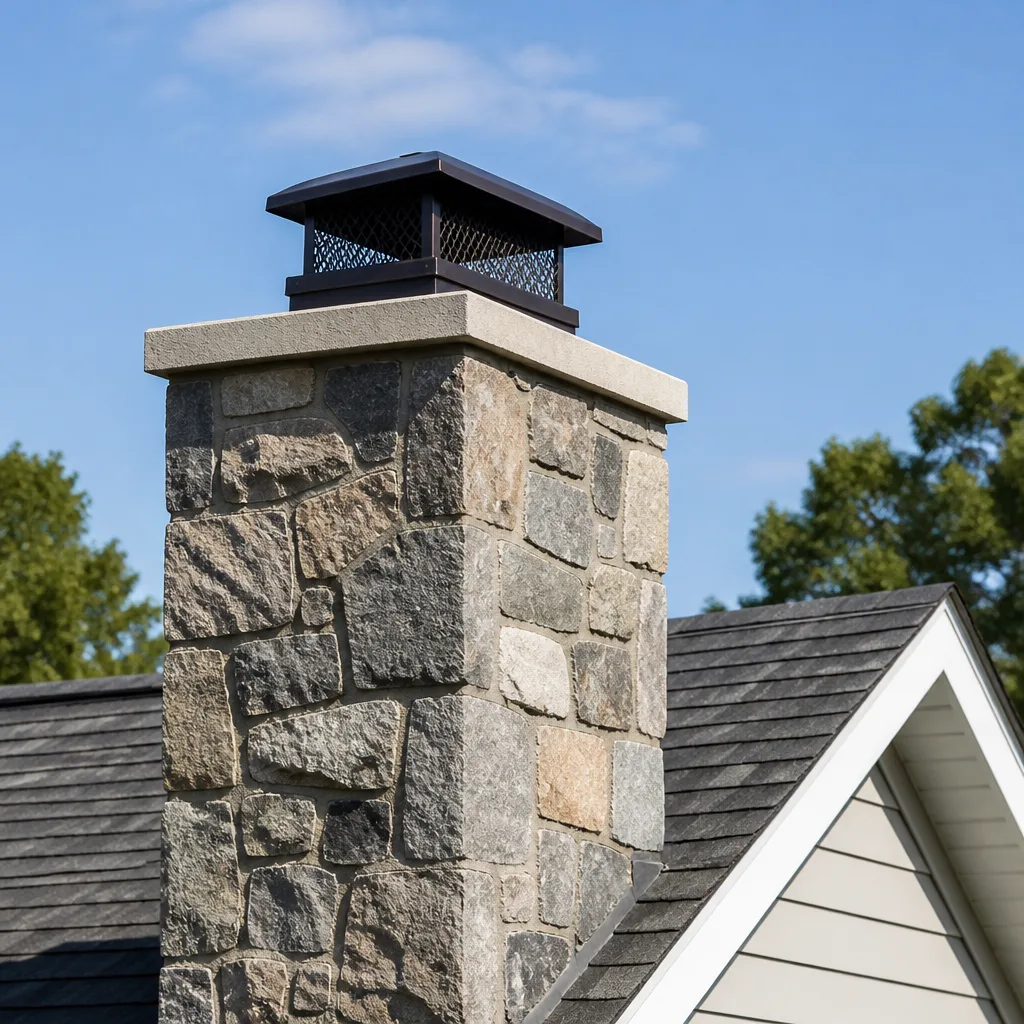 Caps & crowns
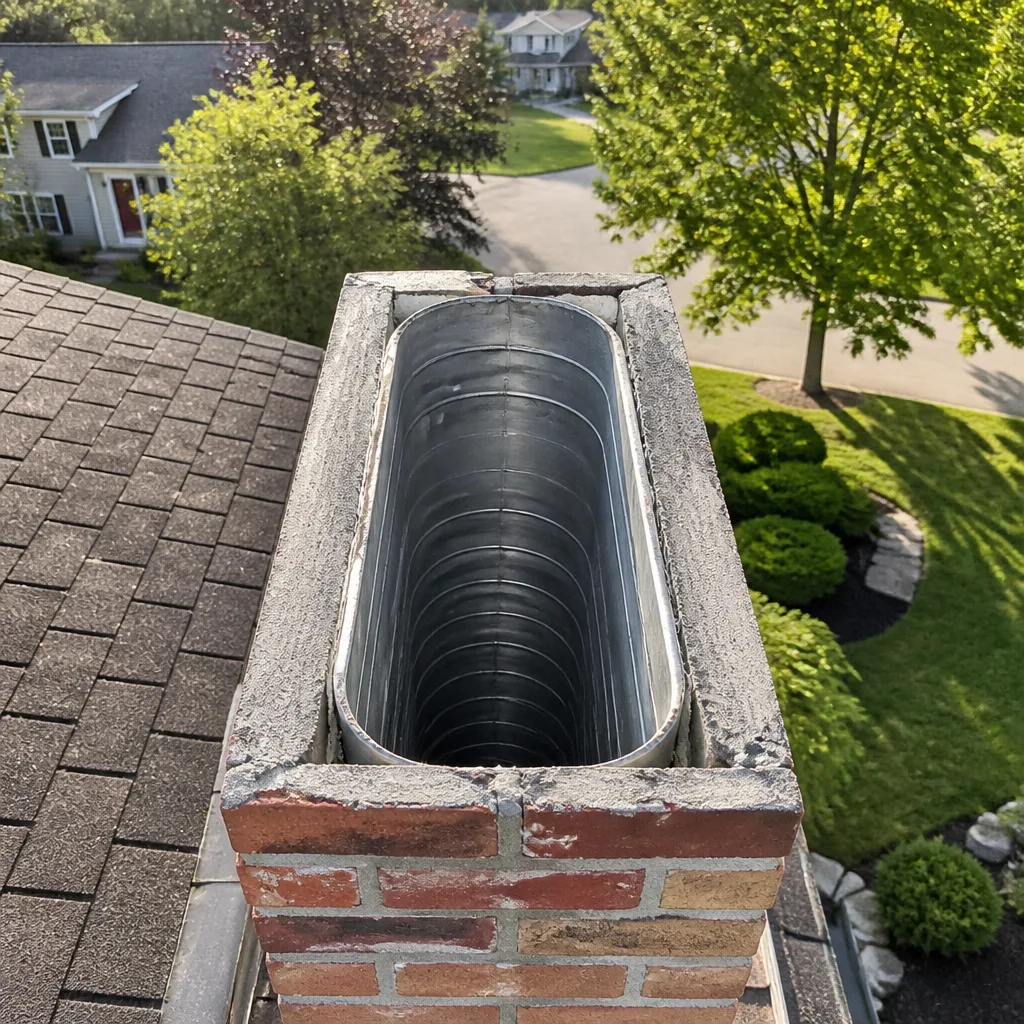 Flue relining
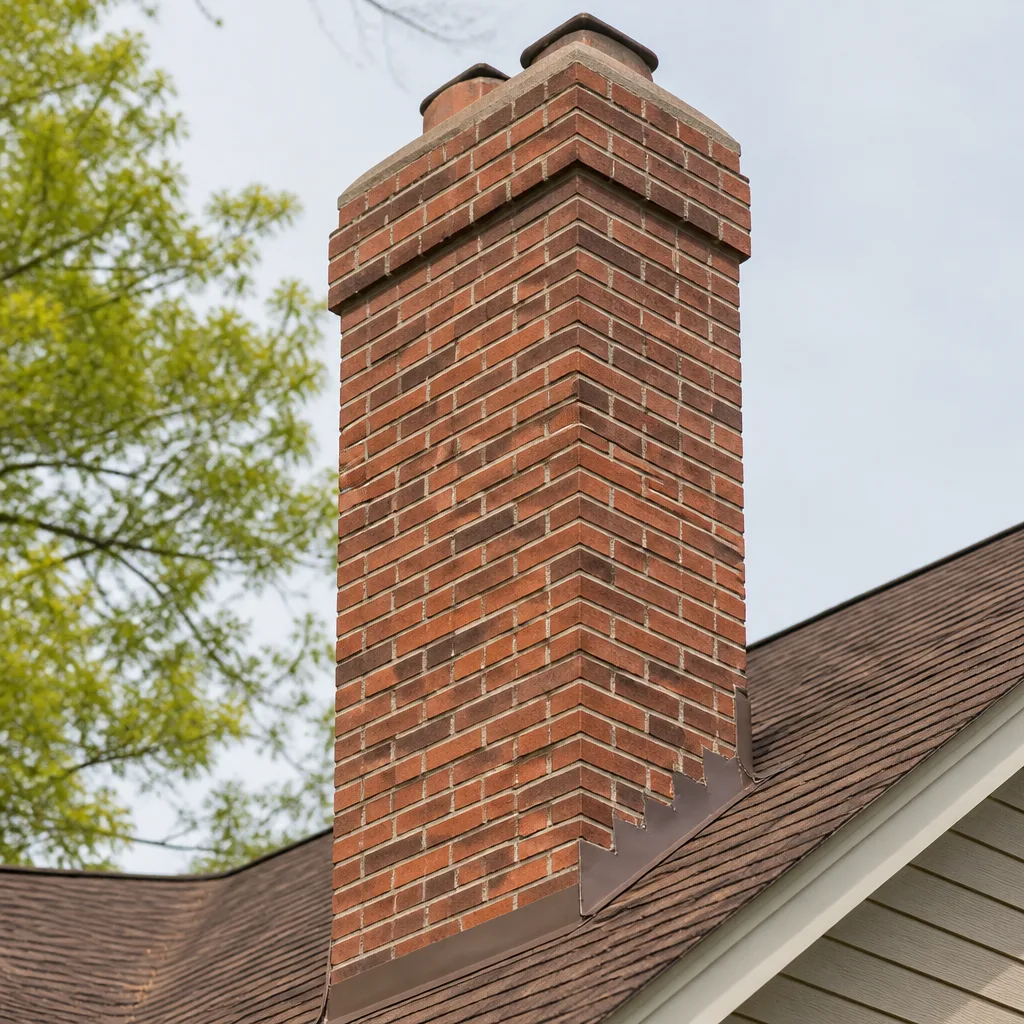 Masonry repair
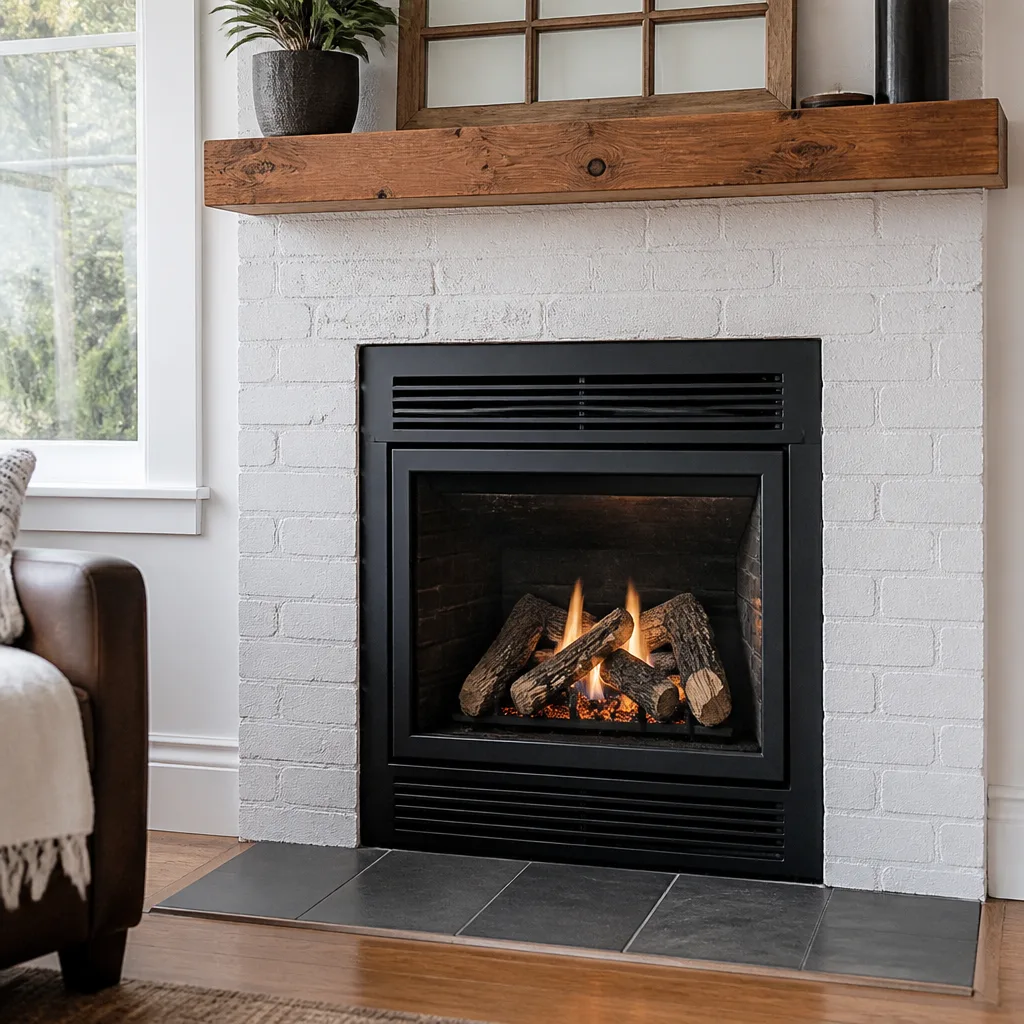 Gas fireplace service
Level 1 sweep and inspection to the NFPA 211 annual standard - flue, crown, cap, and flashing checked and photographed
Chimney sweep logs do not sweep chimneys. They loosen some creosote - which then falls where a brush and vacuum still have to collect it.
How to Hire a Chimney Cleaning Contractor in Sandy: A Step-by-Step Guide
The cheapest chimney quote in Sandy often comes from someone whose real trade is something else entirely. A handyman with a brush, an HVAC company that added sweeping to the menu, a roofer who offers to “clean it out while we’re up there” – none of these are chimney specialists, and the problem shows up later. A cursory cleaning that skips a proper inspection can leave a cracked flue tile, a failing crown or a blocked liner undetected. Those problems don’t stay small. What starts as a maintenance item becomes a structural repair. This guide walks you through the exact questions, credential checks and written-scope requirements that separate a full-service chimney specialist from a generalist with a brush, so you know what you’re actually paying for before anyone climbs on your roof.
Quick Answer
To hire a chimney cleaning contractor in Sandy, verify three things before you book: the technician’s CSIA or NFI credentials for the specific work being done, current liability and workers’ compensation insurance that names chimney work (checkable through Utah’s DOPL license lookup), and a written scope of work that itemizes the sweep, the inspection level and any recommended repairs with photo evidence. Ask whether the company performs chimney repair and relining in-house or refers it out. If they only clean, they can’t diagnose what they find – and you’ll pay twice.
Styles & brands we work with
- Sweep & inspection
- Caps & crowns
- Flue relining
- Masonry repair
- Gas fireplace service
Table of Contents
- Why a Chimney Specialist Beats a Generalist in Sandy
- The CSIA and NFI Credential Difference
- Five Interview Questions That Reveal a Real Specialist
- What a Written Scope of Work Must Include
- How to Verify Insurance for Chimney Work in Utah
- Utah-Specific Red Flags to Watch For
- Repair-First vs. Replace-Now: Reading the Recommendation
- What Happens During a Sandy Chimney Appointment
Why a Chimney Specialist Beats a Generalist in Sandy
A chimney is a safety system. It moves hot combustion gases and carbon monoxide out of your home, and it does that through a flue that expands, contracts and weathers every season. The work of keeping that system sound isn’t a cleaning chore with a safety label attached – it’s a diagnostic appointment. That distinction matters more in Sandy than in many places, because the local climate puts a specific kind of stress on masonry and metal chimneys. Sandy winters swing between hard freezes and daytime thaws, and that cycle works on mortar joints, crown edges and flue tile the way it works on a driveway: water gets in, freezes, expands, and opens the crack a little wider each time. Summer heat and the dry air of the valley pull moisture back out and leave the salts behind.
A specialist knows to look for that pattern. A generalist cleaning a chimney is usually looking at the firebox and the flue from the bottom, running a brush, and leaving. What they don’t examine is the part of the system that fails first in Sandy: the crown, the cap, the top few courses of masonry, and the liner itself. In our experience, the calls that turn into expensive repair work are usually the ones where a previous sweep missed something visible at the top of the flue.
There’s a second reason specialists matter here. Sandy has plenty of homes with older, offset flues – the kind where the chimney channel jogs to one side as it rises through the house. Those flues are common in mid-century construction and they’re awkward to reline. Companies that only carry rigid liner systems will often decline the job or recommend a tear-out. A company that carries flexible systems like DuraFlex can work with the offset instead of fighting it. If your contractor only has one tool, every problem starts to look like the job that tool can do.
What “Full-Service” Actually Means
Five service categories make up a complete chimney relationship: sweeping, inspection, cap and crown work, fireplace repair, and chimney structural repair. A company that covers all five can diagnose and fix in a single visit cycle. A company that covers one or two has to hand you off, and the handoff is where information gets lost and costs get duplicated. When you’re comparing contractors in Sandy, ask directly which of those five they perform themselves.
The CSIA and NFI Credential Difference
Two credentials come up constantly in chimney hiring conversations, and they certify different things. The CSIA – Chimney Safety Institute of America – credential is the one that matters most for a cleaning-plus-inspection appointment. A CSIA-certified sweep has passed a proctored exam on venting, combustion, chimney construction and inspection standards, and has agreed to a code of ethics. When someone tells you they’re “certified,” this is the credential you want them to name. Ask for the certificate number; CSIA maintains a searchable directory of certified professionals, and the lookup takes about a minute.
NFI – the National Fireplace Institute – certifies at the appliance and system level: gas, woodburning and pellet. An NFI-certified technician has been tested on how specific appliances vent and how their venting interacts with the chimney. For a routine sweep, NFI isn’t the credential that matters. For diagnosing a wood stove insert, a gas fireplace or a pellet appliance that isn’t drafting correctly, it is. If your home has an insert or a freestanding stove, ask whether the technician holds the NFI certification for that fuel type.
What Each Credential Tells You
- CSIA: Examined on chimney and venting fundamentals plus inspection standards. Best indicator of competence for sweeping and inspection.
- NFI (Gas, Woodburning, Pellet): Examined on appliance-specific venting. Matters when an insert or stove is part of the system.
- Both: The strongest combination for a home with a fireplace insert, since it covers the chimney and the appliance.
- Neither, stated plainly: Not automatically disqualifying, but it means you’re relying on the company’s own word. Ask what training the technician actually has.
A technician without letters after their name can still do good work. But credentials exist so you don’t have to take anyone’s word for it. Our technicians have up to 8 years of experience, and we point homeowners toward verifiable credentials rather than asking them to trust a logo on a mailer. If a Sandy contractor gets defensive when you ask for a certificate number, that reaction is itself information.
Five Interview Questions That Reveal a Real Specialist
You can learn most of what you need in a five-minute phone call. These questions are designed so that a surface-cleaning operation can’t answer them well and a full-diagnostic specialist can.
- “What level of inspection do you perform, and is it included in the sweep price?” A specialist will name the inspection level – Level 1 for a routine annual check, Level 2 when there’s a change of fuel type, a real estate transaction or a suspected problem. If the answer is “we just clean it,” you’ve found your gap. An inspection offered as a standalone, paid service is a good sign, because it means the diagnosis isn’t being used as a sales funnel for a sweep.
- “Do you do your own relining and repair, or do you refer it?” Full-service chimney work includes relining, crown rebuilds and masonry repair. A company that refers the repair has no incentive to look closely during the cleaning – the referral partner gets the bigger job either way. We carry flexible liner systems so offset flues in Sandy’s older housing stock don’t get turned away or upsold into a tear-out.
- “How do you document what you find?” The answer should involve a camera and photos you get to keep. A specialist runs a camera and shows you the images. A generalist tells you it “looked fine.”
- “Are you licensed and insured for chimney work specifically?” General contractor liability doesn’t always cover chimney work, and workers’ comp matters when someone is on your roof. Ask for a certificate of insurance naming chimney work. More on verifying this below.
- “What brands and materials do you install?” This one separates the specialists fast. A real chimney company can name what goes into your home – HeatShield, Gelco, Olympia Chimney, Famco, Copperfield, DuraFlex. If the answer is vague, the materials are vague too. Professional-grade materials are brands you can look up and verify.
Ask all five before you book. A specialist will answer them without hesitation, and the answers give you a basis for comparing quotes that’s about substance rather than price.
What a Written Scope of Work Must Include
Never sign and never pay a deposit on a verbal agreement. The written scope is your protection, and a professional company will offer one before you ask. Here’s what it needs to contain.
- The specific services, itemized. “Chimney cleaning” is not a scope. The sweep, the inspection level, any cap or crown work, and any repair should each appear as separate line items with their own prices.
- The inspection level named explicitly. Level 1, 2 or 3, and the reason for that level. If a camera inspection is part of the plan, it should say so.
- Photo documentation of findings. Written into the scope, not offered as a favor. This is the evidence that supports any repair recommendation.
- A statement of what happens if problems are found. Will they stop and quote, or continue? A scope that leaves this open invites surprises.
- Materials named by brand for any repair or relining. If a liner is being installed, the brand and system type should be in writing.
- What’s excluded. Masonry rebuilds, crown replacement and cap installation should either be priced or clearly listed as out of scope for the current visit.
Before you sign, read the scope twice. The single most common source of disputes in Sandy chimney work is a scope that said “cleaning and inspection” but was priced as though it covered a full diagnostic. A written estimate sets the final price. There’s no legitimate reason for a legitimate company to resist putting the scope on paper.
How to Verify Insurance for Chimney Work in Utah
Ask for proof of insurance and then actually check it. Utah licenses contractors through the Division of Occupational and Professional Licensing – DOPL – which maintains a public lookup for contractor licenses and their status. Look up the company name and confirm the license is active and current. A license that’s expired or suspended shows up immediately, and it’s one of the most common things homeowners skip.
License status isn’t the whole story, though. Two coverage types matter for chimney work specifically:
- General liability insurance. Covers damage to your home – a cracked flue tile, a damaged roof, water intrusion from a botched crown. Ask for a current certificate of insurance and confirm chimney work is within the covered scope. General contractor liability sometimes excludes it, so a certificate that just says “contractor” isn’t enough.
- Workers’ compensation insurance. Covers the technician if they’re injured on your property. Without it, an injury on your roof can become your liability. Ask for the certificate and check the company name on it matches the company you hired.
This is also the moment to notice whether the company you’re talking to is even a Utah company. Utah’s market has a pattern worth knowing: out-of-state crews move in seasonally, sometimes after wildfire seasons when chimney work is in demand, and they aren’t always licensed in Utah. If a door-to-door offer or a flyer with no physical presence in the state shows up, run the DOPL lookup before you say yes. It’s free and it takes a minute.
Utah-Specific Red Flags to Watch For
Some problems are more common in this market than in others. The following are the ones we’d flag to any Sandy homeowner.
- Unlicensed out-of-state contractors. Seasonal crews sometimes appear during high-demand periods and disappear. Utah requires contractor licensing through DOPL for most chimney work, and an out-of-state crew that can’t produce a Utah license is a hard stop.
- Pressure to reline on the first visit. A liner that needs replacement is a real thing, but so is a liner that gets replaced because the recommendation came without evidence. Any relining recommendation should come with camera photos you can see for yourself. If the conversation is about cost before it’s about evidence, slow down.
- “Free inspection” used as a sales funnel. A genuinely free inspection can exist, but if the inspection ends with a high-pressure sales pitch for a sweep and a liner the same day, the model was never about inspection. A standalone, paid inspection signals a diagnostic relationship.
- No brand names on materials. If you ask what brand of liner or crown material is going in and get “we use whatever’s good,” the answer is that no one is on the hook for quality. Look for materials from recognized manufacturers like HeatShield, Gelco, Olympia Chimney, Famco or Copperfield.
- No written scope and a deposit requested first. A company that wants money before it will put the work on paper is asking you to trust its memory. Get the scope in writing and pay only what it specifies.
- Refusal to identify the technician’s credentials. A simple question – “is your sweep CSIA-certified?” – should get a simple, specific answer.
- No camera, no photos. A chimney inspection without a camera is a visual check at best. If the company can’t show you what it found, it hasn’t really found it.
Repair-First vs. Replace-Now: Reading the Recommendation
A chimney liner that’s been compromised has two possible paths. One is full relining – removing the old liner and installing a new one. The other is liner restoration, resurfacing the existing flue interior with a ceramic system. Both are legitimate. The problem is when a contractor recommends replacement without ever presenting the repair-first option, because the bigger job got there first. HeatShield is a manufacturer-backed liner restoration system used to resurface a flue that’s still structurally sound but has eroded. For the right chimney, it can extend liner life without the cost of full replacement – and it carries its own product warranty from the manufacturer. A specialist carries the systems for both and can tell you, with photographs, which one your flue actually needs.
That’s the standard we’d hold any Sandy contractor to. The recommendation should answer three questions: what did the camera show, what are the options, and what happens if you wait? If the third question gets dodged, the honesty of the first two is worth doubting. In our experience, an honest company can tell you when a repair can safely wait. The chimney is not going to fall down this week just because the crown has a small crack. The danger that matters most is a compromised flue that lets hot gases and carbon monoxide escape into the home, or an accumulation of creosote that catches fire. Those are reasons to act. A cosmetic recommendation is not.
What a Repair Recommendation Should Look Like in Writing
- The camera findings, in photos you keep.
- At least two options when both are viable – restoration and relining.
- The product brand named for each option, so you can look it up.
- A plain statement of whether the work can wait.
- The warranty terms, in manufacturer language, not a verbal promise.
What Happens During a Sandy Chimney Appointment
Once you’ve hired, the appointment runs on a predictable shape, and knowing it makes it easier to tell whether the technician is doing the job or just going through motions. Here’s what a full-service visit should look like.
- Lay-down and protection. Drop cloths around the hearth before any equipment comes in. A clean visit starts clean.
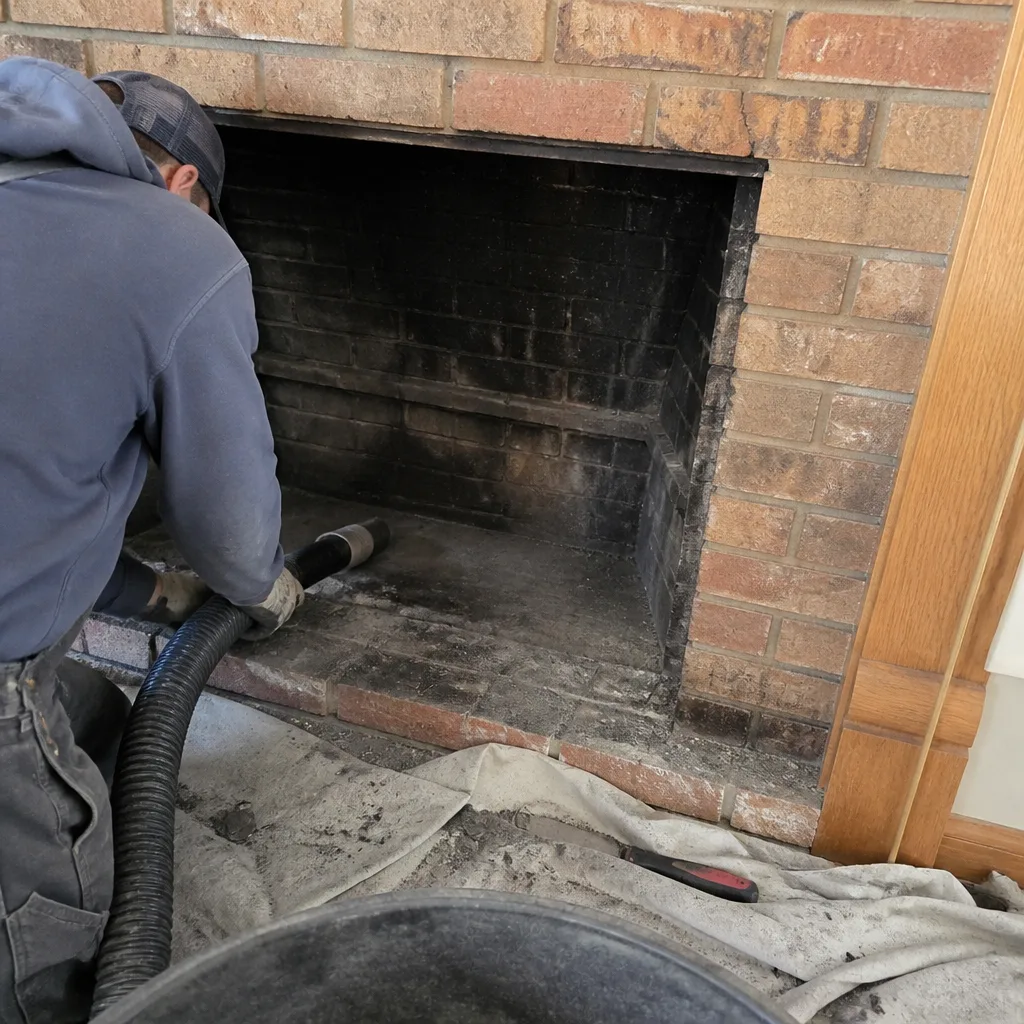
- Sweep. Brushing from the roof or from the firebox, with a vacuum running to hold the dust. Your chimney sweep should leave the room as clean as it found it.
- Inspection at the top. Cap, crown and flue checked from above – that’s where the freeze-thaw damage shows in Sandy’s climate.
- Camera inspection of the flue. Photos taken and shown to you. Any problem gets documented, not described to you from memory.
- Findings review, in your home, before anyone leaves. What was found, what it means, what the options are. Nothing gets recommended without camera evidence you can look at.
- Written scope for any repair. Itemized, branded, with the option to schedule or wait.
If any of those six steps is missing, ask why. A technician who skips the camera inspection or won’t show you what they found has told you what kind of operation you hired – and you can decide from there whether to invite them back next year.
A clean chimney is a safety checkpoint, not just a maintenance chore. If the inspection turns up fireplace problems – a damaged firebox, a failing damper – the fireplace should be handled in the same visit cycle, not deferred to a second contractor. If it turns up crown damage, that’s a chimney cap & crown conversation, and the cap and crown are the part of the system that keeps water and animals out. And if a structural problem shows up in the masonry, a full-service chimney company should be able to handle the repair without a referral. The full range of work – Sandy Chimney Sweep Pros covers all five service categories – is what you’re shopping for when you hire. That’s the point of hiring a specialist instead of a generalist: chimney sweep work and fireplace repair sit in the same hands, and nothing gets lost in the handoff.
Common Mistakes to Avoid
- Choosing on price alone. The lowest quote in Sandy is frequently from someone whose primary trade is something else. You aren’t just buying a cleaning; you’re buying the diagnosis that catches the problem before it gets expensive.
- Not asking whether the inspection is included. Many quotes say “chimney cleaning” and mean exactly that. Confirm the inspection level in the written scope before you book.
- Skipping the DOPL lookup. Utah’s public license lookup is free and takes a minute. Check the license status before anyone gets on your roof, not after.
- Accepting a liner recommendation without photos. Any relining recommendation should come with camera images. If it doesn’t, ask for them, and if they can’t produce them, get a second opinion.
- Ignoring the crown. In Sandy’s freeze-thaw cycles, the crown is where water damage begins. A sweep that doesn’t come down off the roof with an opinion on the crown hasn’t finished the job.
- Treating a free inspection as a diagnosis. A free inspection that turns into a same-day sales pitch wasn’t a diagnosis. A standalone, paid inspection is a better signal of a company that will tell you what your chimney actually needs, not what sells the biggest job.
- Forgetting the paperwork. No written scope, no named brands, no certificate of insurance – if you can’t hold it in your hand, it doesn’t protect you.
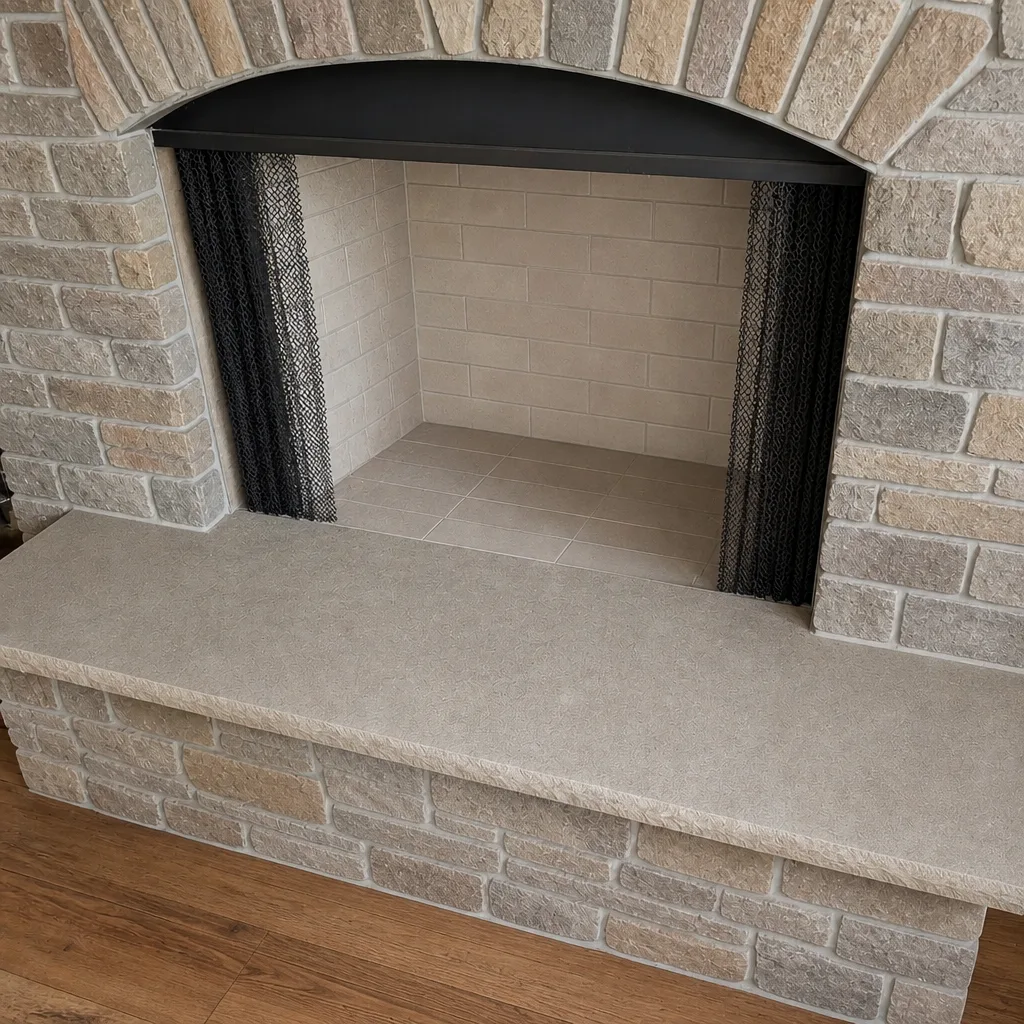
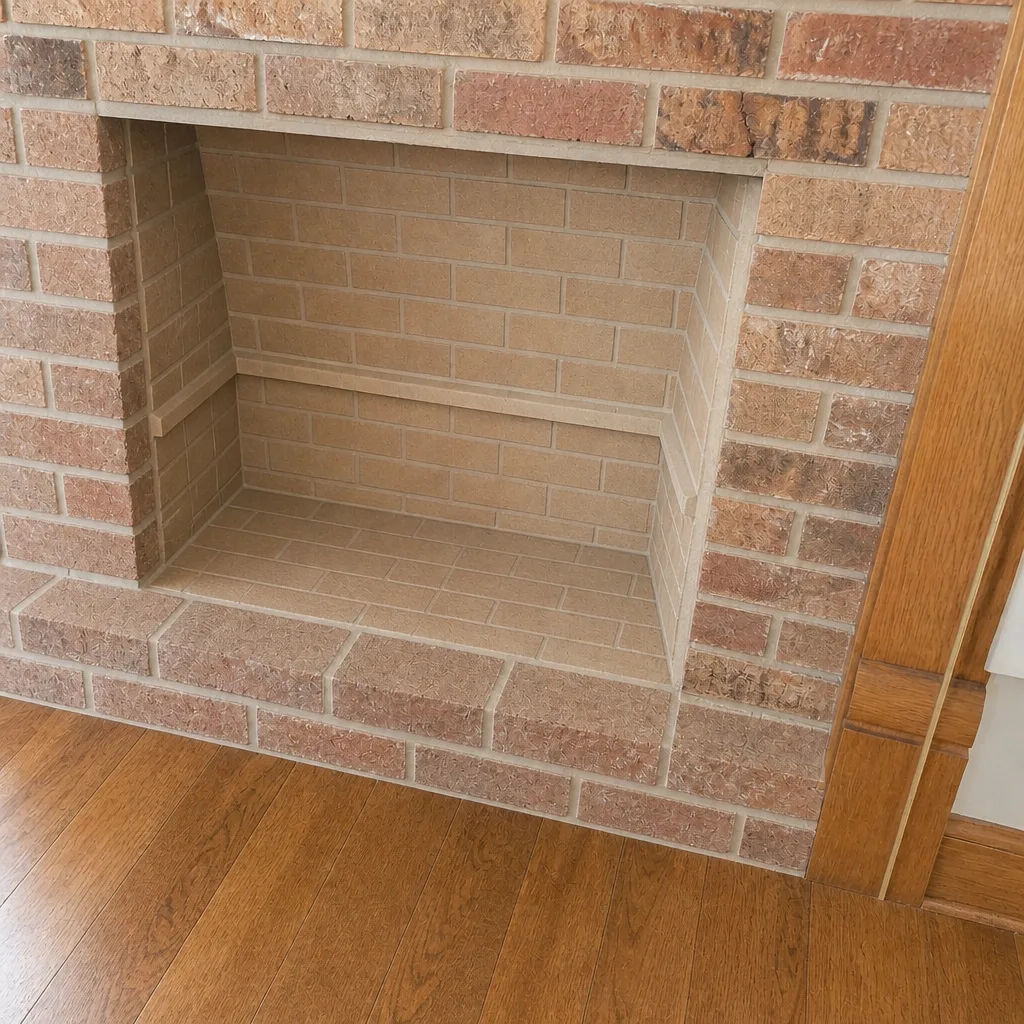
See the difference
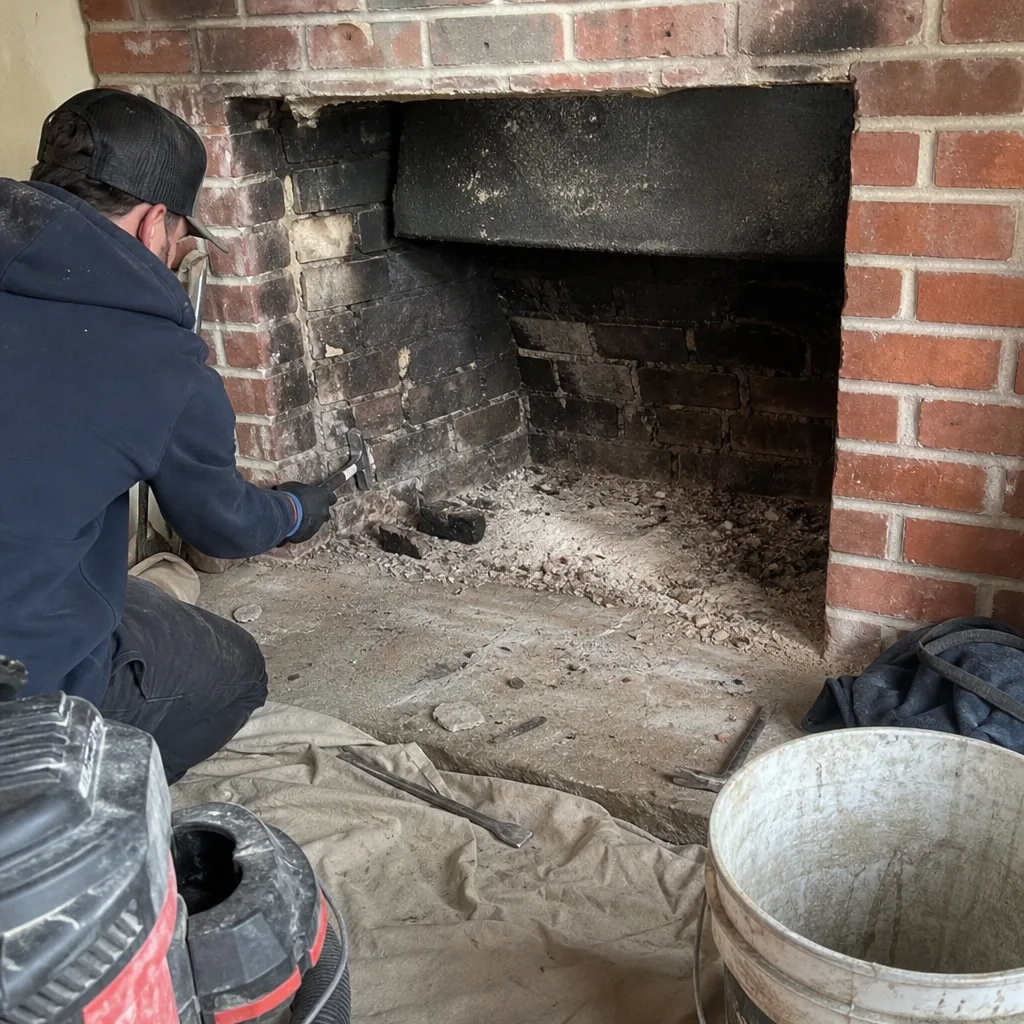 Before
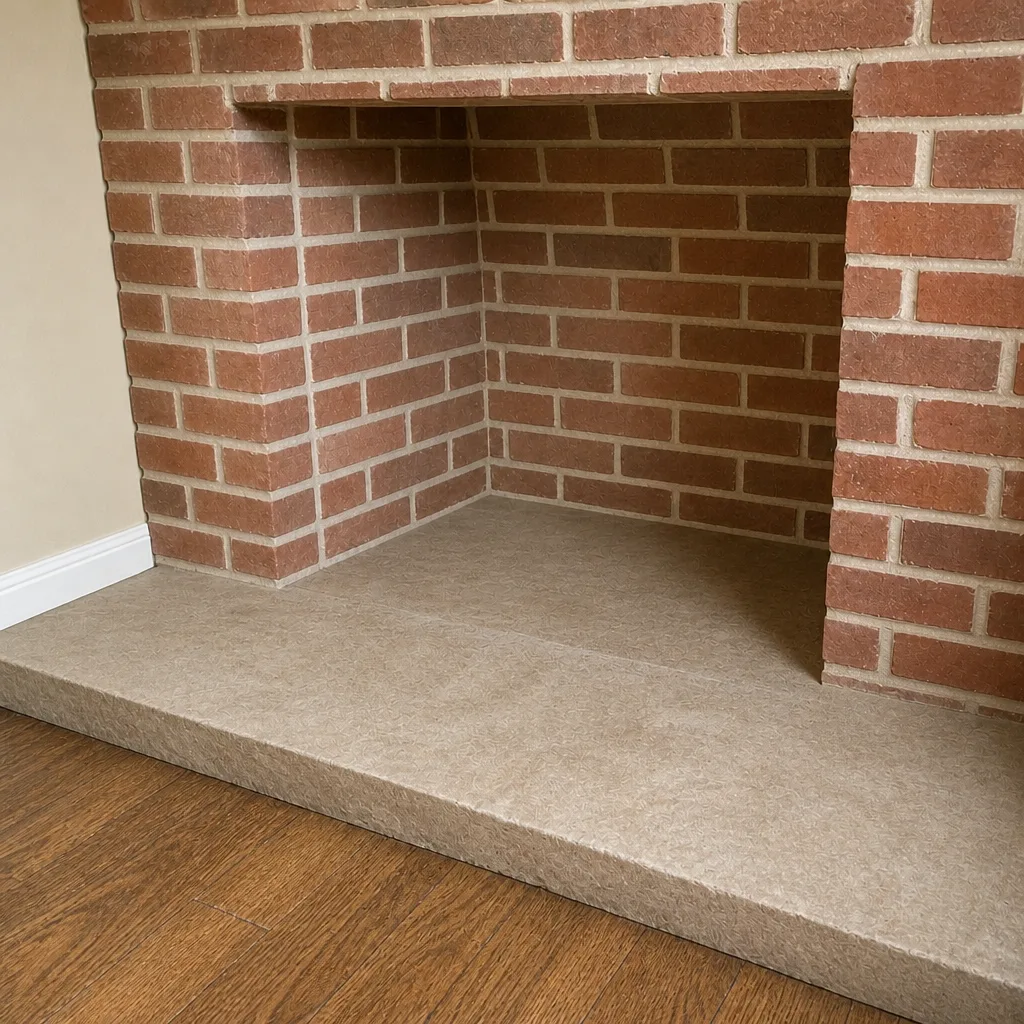 After
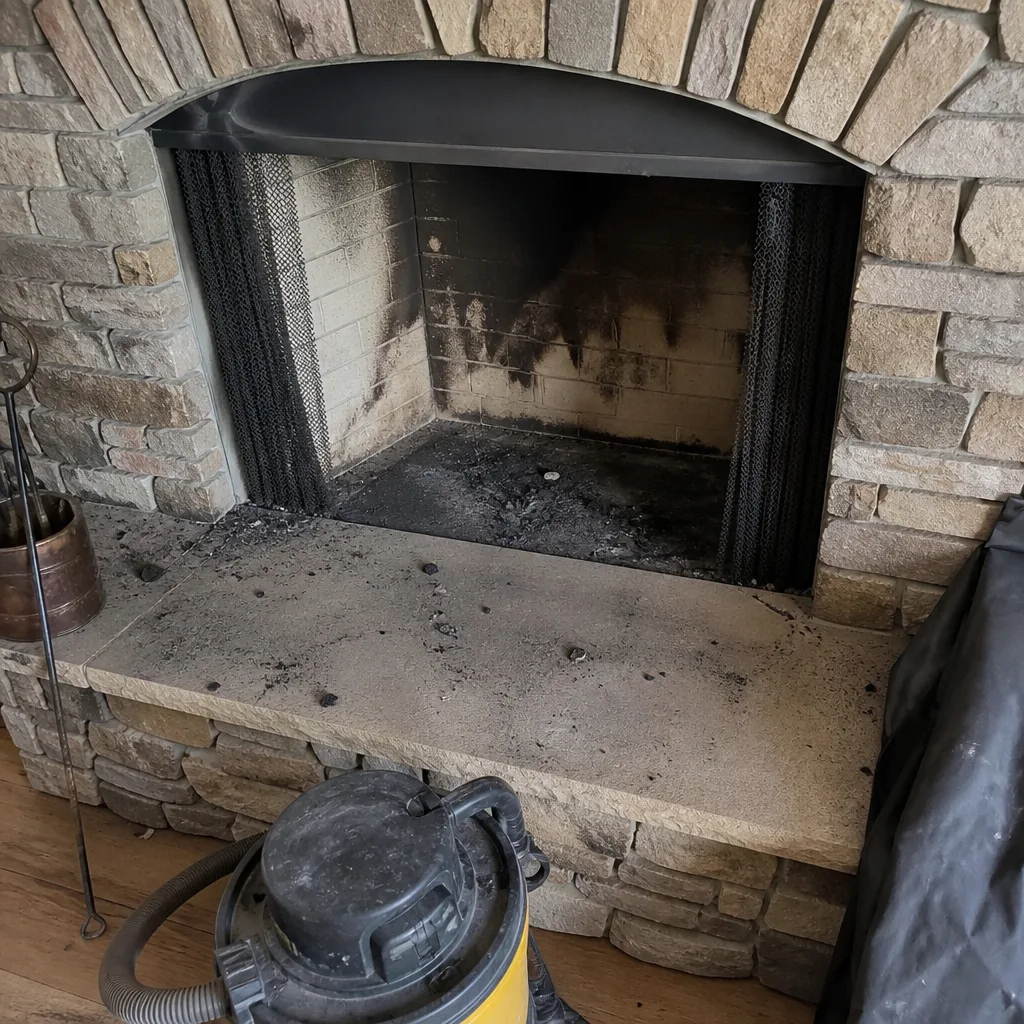 Before
 After
 Before
 After
When to Call a Professional
Some situations call for a specialist rather than a do-it-yourself attempt. Call a professional if you smell smoke in the house when the fireplace isn’t running, if the fire smokes back into the room, if you see creosote buildup you can’t identify, or if you notice cracked or crumbling mortar around the flue or a crown that’s flaking. Also call if you’ve moved into a Sandy home and don’t know the last time the chimney was inspected, if you’ve changed the fuel type or added a stove insert, or if you’re buying or selling – a pre-purchase inspection is the cheapest way to find out what you’re getting. Carbon monoxide is the reason not to put it off: a compromised flue can let exhaust gas into the living space without any obvious sign. If any of that sounds familiar, Sandy Chimney Sweep Pros offers free estimates in Sandy. Call (844) 625-7409. We answer 24/7. Fast dispatch from 7am to 7pm, Sunday through Friday.
Frequently Asked Questions
A chimney sweep in Sandy typically runs a few hundred dollars, and the price depends on the flue configuration, whether an inspection is included, and whether an insert or offset flue is involved. The written estimate sets the final price, and you should have it in hand before any work starts. Call (844) 625-7409 for an exact quote – estimates are free.
Not always. A liner with eroded interior but sound structure can sometimes be restored with a ceramic resurfacing system like HeatShield instead of being fully replaced, and for the right flue that saves the cost of relining. The recommendation should be backed by camera photos you can see. If a contractor tells you it needs replacement, ask for the images first. Call (844) 625-7409 for an exact quote – estimates are free.
Once a year for a home that uses the fireplace regularly, and more often if you burn wood heavily or notice creosote buildup. Sandy’s annual freeze-thaw cycle makes the yearly inspection worthwhile on its own, because it’s when crown and flue damage gets caught early. Call (844) 625-7409 for an exact quote – estimates are free.
Creosote accumulates on the flue walls, and heavy creosote is what fuels a chimney fire. Separately, a damaged flue can let carbon monoxide and hot gases escape into the home. Neither risk announces itself, which is why the annual inspection matters more than the cleaning itself. Call (844) 625-7409 for an exact quote – estimates are free.
Utah licenses contractors through DOPL, and CSIA certification is a separate professional credential rather than a state requirement. That distinction makes it a useful signal: a company that holds CSIA certification has voluntarily been examined and bound to a code of ethics. Ask for the certificate number and verify it. Call (844) 625-7409 to book a visit – estimates are free.
Yes. A pre-purchase inspection is a standalone service, not a free add-on, and that’s deliberate: it keeps the inspection unbiased and reportable to both sides of a transaction. You get the camera findings in writing and a clear statement of what’s sound and what needs work. Call (844) 625-7409 for an exact quote – estimates are free.
The Bottom Line
Hiring a chimney contractor in Sandy comes down to verification. Check the credentials, check the license and insurance through Utah’s DOPL lookup, and insist on a written scope with named materials before you pay anything. Ask whether the company performs repair and relining itself or hands it off – because the diagnosis during the cleaning is only as good as what the company can do about what it finds. The difference between a specialist and a generalist isn’t visible in the cleaning. It’s visible in what gets caught before it becomes a structural problem. That’s what you’re really paying for, and it’s worth asking for by name.
If you’ve read this far and want to skip the interview questions, call us instead. Sandy Chimney Sweep Pros offers free estimates in Sandy. Call (844) 625-7409. We answer 24/7. Fast dispatch from 7am to 7pm, Sunday through Friday. Every visit includes a camera inspection with photo documentation you keep, and nothing gets recommended without evidence you can see for yourself.
Written by the team at Sandy Chimney Sweep Pros.